
What visual instructions or reminder cues should be present in each space to support sequenced and organized performance?
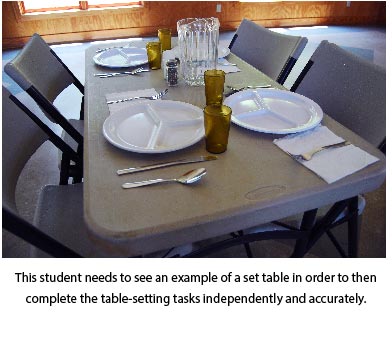
Simply put, visual instructions are crucial to this topic. Visual instructions might be delivered in a number of different forms: Written instructions, written instructions supported by photos /icons, or picture instructions. Picture instructions might be images of the completed product (“jigs”). Actual 3-D representations of the completed product can also serve to clarify how something should be made / presented:
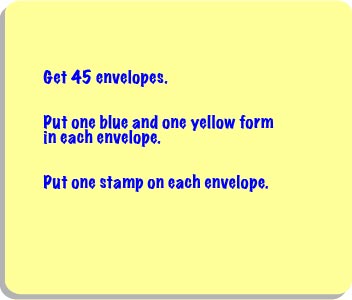
Judging “How much?” or “How long?” is a struggle for many individuals. Providing start and end times (1:15pm-3:00pm), specific amounts (18 bags) or time limits (“30 minutes”) can help the individual complete the task thoroughly yet efficiently.
If the student is using a coping strategy to follow verbal instructions, the reminder card can be critical to consistent performance. The reminder card must be readily accessible at all times since verbal instructions happen in so many contexts.
How can I organize the materials (or help the student organize) to support independent performance? Where do materials go when they are finished?
Organization will be very important in helping the student follow instructions. The student may have good intentions of following instructions, but if they do not know where to find materials or have to gather lots of materials beforehand, success becomes that much harder to achieve. Along with visual instructions, include the materials that go with the task if possible.
In my design of each visual support, have I considered whether the student may need visual clarity cues (added to the environmental design, communication script or scenario, to-do list, or social narrative) to highlight (label) or emphasize key features or concepts?
In addition to visual instructions, additional visual cues may be helpful in teaching the student to do a task successfully. For example, a written list may tell the student which plants to water at a nursery. A line drawn on the outside of the flower pot is a visual cue that indicates to the student how much water to fill in each pot. Or, if it is an area that needs to be watered (certain plants in the ground), use other visual markers to indicate that area, such as sticks, rocks, natural barriers such as rows, or even a hula hoop put around the plants of choice. These visual cues provide instruction on what exactly needs to be watered.
In an office job, visual cues may come in the form of color coding. For example, a written list may direct the student to make photocopies of papers in the red folder. The red folder provides additional visual clarity and instruction on what to do.
In order to align this intervention topic area with the unique needs of the student, do you need to create visual instructions and reminder cues in the View2do program?
