
What type of graphic organizer(s) might the student require in order to visually represent and organize the concepts, feelings, or behaviors that relate to this particular topic?
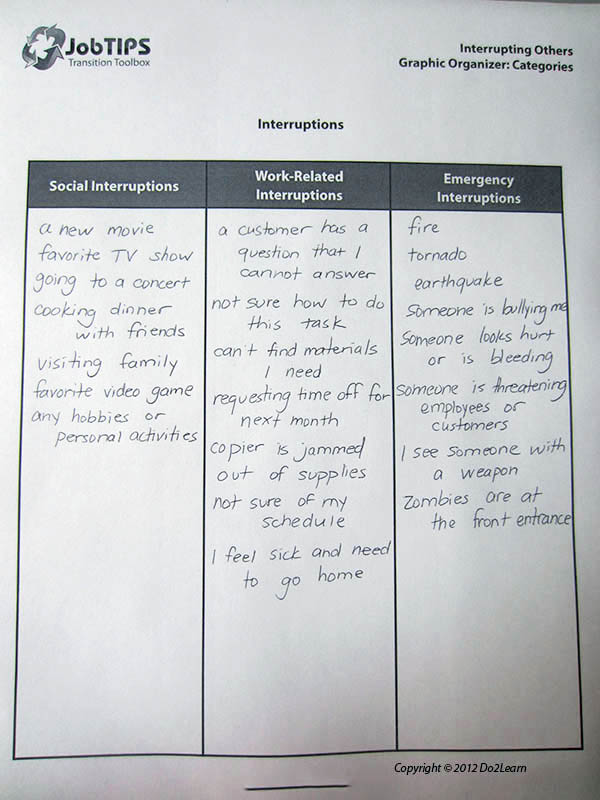
For many, it is first important to concretely identify what constitutes a work-related interruption, versus a social interruption, versus an emergency interruption. Identify a particular event, and work with the student to have him place that event into one of the categories:
A checklist can visually represent the steps of a decision-making process (e.g. should I interrupt right now?). If you use this type of checklist, be sure to clearly define what “WAIT” means and what appropriate waiting “looks like” for the student:
Is there a way to visually or thematically incorporate the student’s interests into this graphic organizer to increase motivation and engagement?
There has been a popular rise in interest in zombies and vampires over the last several years. Does this student share such interests? If so, visually or thematically incorporate them into the supports to increase interest and buy-in. For example, when teaching the categories of interruptions in the first graphic organizer above, include one or two zombie-related events within the list of realistic, relevant events:
“I watched an awesome zombie movie last night.” Which category does that belong in? (Social interruptions)
“There is a zombie in the conference room eating people.” Which category does that belong in? (Emergency interruptions)
What additional visual clarity cues (e.g. icons, bolding, highlighting, color-coding) might you add to the graphic organizer to clarify concepts and to direct attention to key details?
In order to align this intervention topic area with the unique needs of the student, do you need to create a graphic organizer in the View2do program?
