
What type of graphic organizer(s) might the student require in order to visually represent and organize the concepts, feelings, or behaviors that relate to this particular topic?
Consider the use of a graphic organizer to help the student evaluate written scenarios, video examples or live role-play situations. The graphic organizer might help the student to identify what is happening in that moment, and what the other person is doing (facial expressions, movements, words, etc.). He can use this information to guide his decision – "should I make a suggestion, or keep my thoughts to myself?"
A different approach can be used to address the abstract concept of ‘when to help.’ Since there are so many different situations, create a list or a chart that lists various situations where you can help. Keep this ‘running’ list for use in practice sessions. Possibly make a small copy that the student can review if it will help him understand and apply the concept.
The student who loves to make suggestions and who can be overbearing in his ‘help’ may need a graphic organizer to guide his actions in making suggestions.
The organizer may portray:
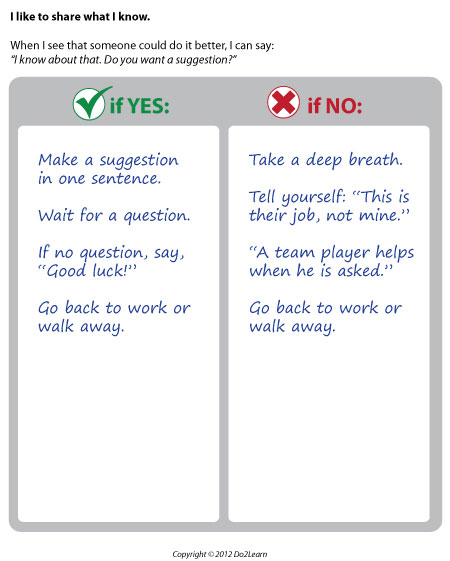
*If the student becomes very anxious in giving suggestions, consider reviewing Self Identify Anxiety for ideas to incorporate in your plan.
Is there a way to visually or thematically incorporate the student’s interests into this graphic organizer to increase motivation and engagement?
What additional visual clarity cues (e.g. icons, bolding, highlighting, color-coding) might you add to the graphic organizer to clarify concepts and to direct attention to key details?
In order to align this intervention topic area with the unique needs of the student, do you need to create a graphic organizer in the View2do program?
