
What visual instructions or reminder cues should be accessible to support performance of this self-regulation skill? Where should these be placed?
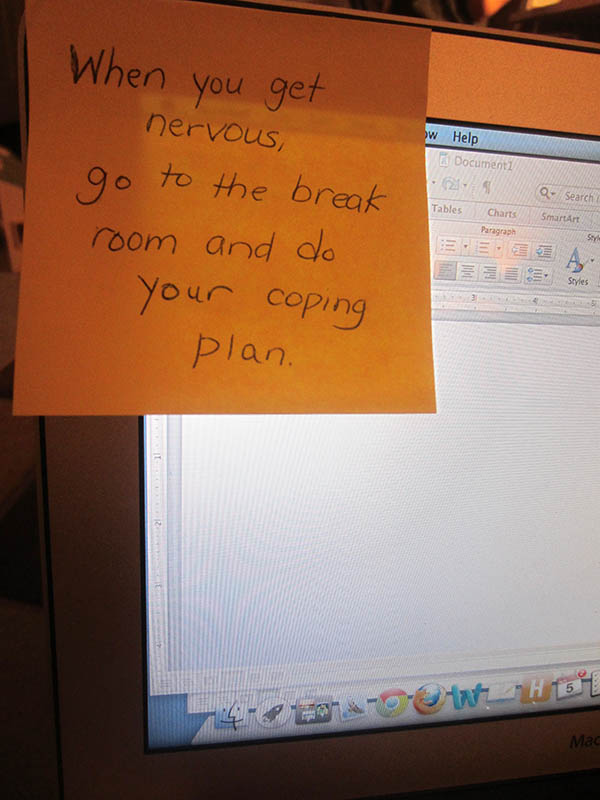
Visual instructions or reminder cues will be very important, particularly so that the behaviors generalize to the work setting. For example, you could write, “When you get nervous, go to the break room and do your coping plan” on a note posted on their computer so that they will easily see it.
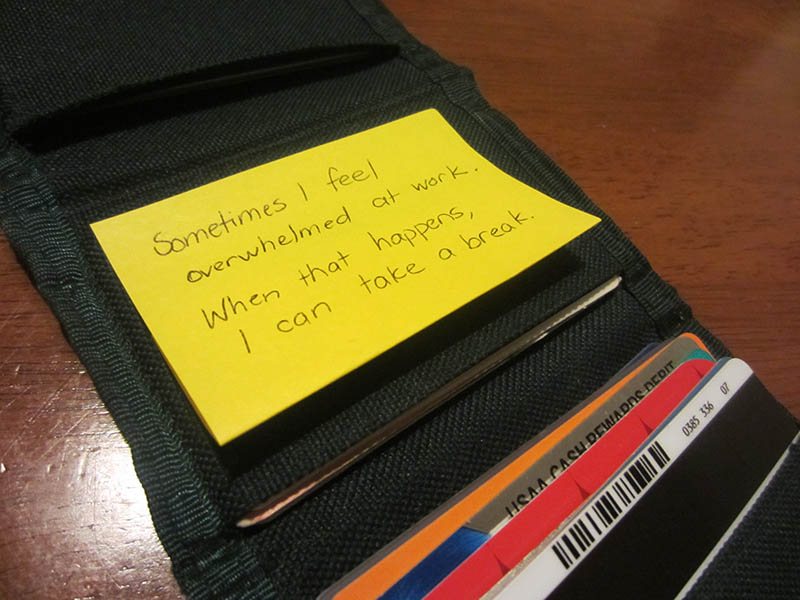
If you use a situational story to teach the student a rule or more appropriate behavior, you could use a short clip of it as a reminder. For example, the student could carry a piece of paper in their wallet with a comforting statement, such as “Sometimes I feel overwhelmed at work. When that happens, I can take a break.”
As part of the priming process, you might develop an informal behavior contract with the student. That plan can also serve as a visual cue to remind the student of more appropriate alternative behaviors. While this behavior plan needs to be easily retrieved by the teachers and student, it is also important to keep such documents in a safe, private location.
Below is one example of a basic behavior contract. As you and the student fill in this contract, it serves as a graphic organizer to visually represent and plan behaviors. Once it is in place, it serves as a reminder of expectations (a visual cue):
In many cases, it might make the student feel more comfortable to use code words or symbols on a visual cue to depict the repetitive behavior.
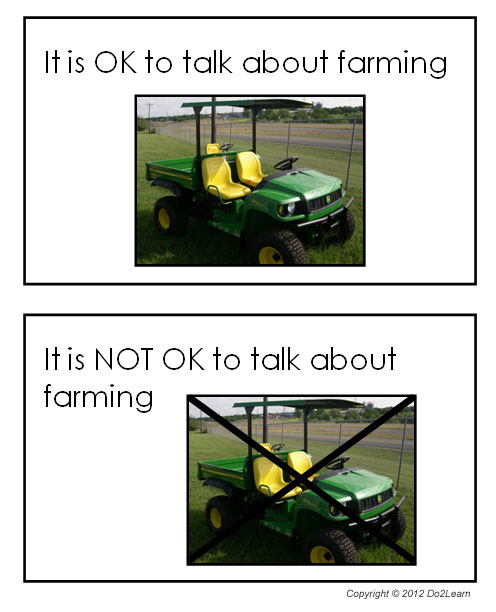
For some students, it would be appropriate to use a simple reminder cue with words and/or pictures to reiterate the “rules.” Below is just one example of a cue that you can refer to (as opposed to applying verbal prompts that are much more difficult to fade):
How can I organize the materials (or help the student organize) to support independent performance? Where do materials go when they are finished?
The student may learn replacement behaviors during instruction on this skill. If so, these may involve the use of various objects, such as stress balls or a journal. These will need to be organized and accessible for the student, especially if they are meant to be used during stress reaction. Perhaps the student has a “calming drawer” where such items are kept to promote the more acceptable behaviors instead of the previous repetitive behavior. This “calming drawer” could also be labeled with an image as a reminder for the student.
Having an organized environment will help the individual who has a need for things to be “just right.” Use bins, folders, labels, shelves, etc. to organize all materials in their environment. Make sure you use a finished box or folder for tasks when they are done. Everything needs to have a place, whether it is materials or a finished product.
In my design of each visual support, have I considered whether the student may need visual clarity cues (added to the environmental design, communication script or scenario, schedule, to-do list, social narrative, and /or video model) to highlight (label) or emphasize key features or concepts?
In order to align this intervention topic area with the unique needs of the student, do you need to create visual instructions and reminder cues in the View2do program?
