
What type of graphic organizer(s) might the student require in order to visually represent and organize the concepts that relate to this particular topic?
A graphic organizer could be used to teach the concept that quality of work is on a continuum. Pictures of different stages of completion of a task, or different levels of thoroughness, could be presented to the student. The student then has to sequence the picture from “worst job” or “poor” to “best job” or “excellent”. For example, a student whose job is to clean the bathroom could be shown 4 or 5 pictures of bathrooms, ranging from dirty to spotless, and then asked to order them from worst to best job. Once the student sequences the pictures from worst to best, discuss (or have them answer questions on paper) what makes the best picture the best.
The graphic organizer may also be used in the priming process to support the student in recognizing the short and long-term consequences of self-monitoring quality. One example of this organizer to address the completion of particular academic tasks might be as follows:
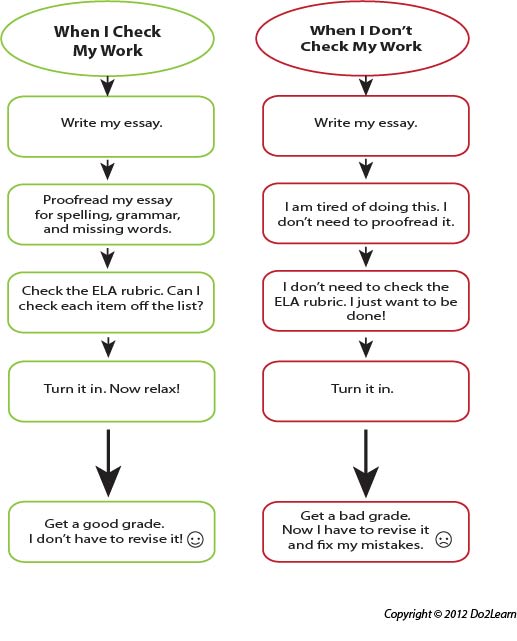
Note that your primary tools are the to-do list, the visual instructions and the environmental design in addressing self-monitoring. However, the graphic organizer can provide a vehicle for practice in understanding and applying the concepts that are being practiced in other situations. Simply, the graphic organizer is not your sole tool in this adventure!
Is there a way to visually or thematically incorporate the student’s interests into this graphic organizer to increase motivation and engagement?
What additional visual clarity cues (e.g. icons, bolding, highlighting, color-coding) might you add to the graphic organizer to clarify concepts and to direct attention to key details?
In order to align this intervention topic area with the unique needs of the student, do you need to create a graphic organizer in the View2do program?
