Going With the Flow
Conversations between people are never static; they move fluidly from one topic to another, and each participant contributes something that helps keep the conversation going. Making comments that are off-topic or insisting that a conversation remain on a single topic will frustrate others and discourage the flow of the exchange. Some students struggle with knowing how to contribute to a conversation, or get frustrated when the topic changes, particularly when they are talking about their favorite activity or subject. Skills such as offering on-topic comments or questions and giving each person a chance to participate take practice to develop. Working on going with the flow in a conversation will pay off in stronger relationships and more rewarding exchanges with others.

Teaching Ideas
Click on the icons below for detailed information on how to teach this skill.





 Guiding Questions
- Does the student have any interest in talking to others?
- How well does he process the words of the speaker?
- Does he recognize the topic of conversation?
- Can he generate a related response (a comment or a question) to the identified topic?
- If he initiates a shift in the conversation topic, is he able to use verbal conventions to connect the old topic to the new so that the shift is not abrupt or awkward?
- Can he read the body cues and voice cues of the speaker while processing the verbal information?
- Can he display cues that signal that he is listening and interested in what is being said?
- Does he have the skills to ask for information where he does not understand what is said or meant?
- Does the student possess the self-regulation skills necessary to avoid monopolizing or “monologuing” when the topic relates to his high interest area?
- Does the student possess the self-regulation skills necessary to avoid interrupting in a way that would be perceived as rude?
Visual Supports
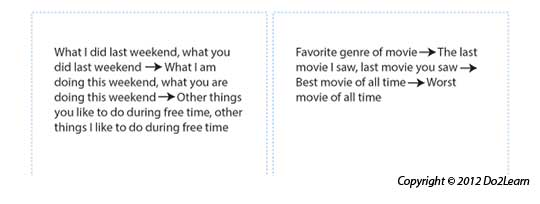
Communication systems and scripts provide the student with a means to initiate communication. Use these cards to practice different scenarios with your students.
|
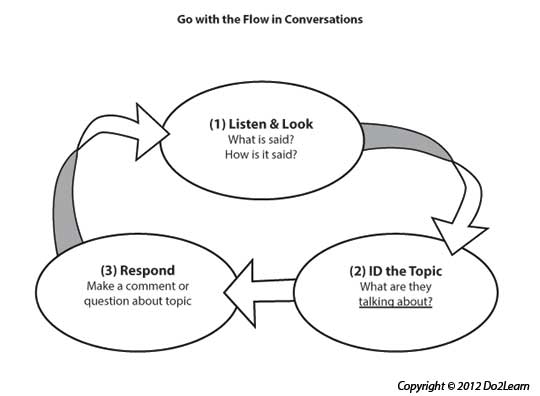
Graphic organizers can provide a student with a way to represent and organize concepts, thoughts, feelings, behaviors, and potential outcomes.
|
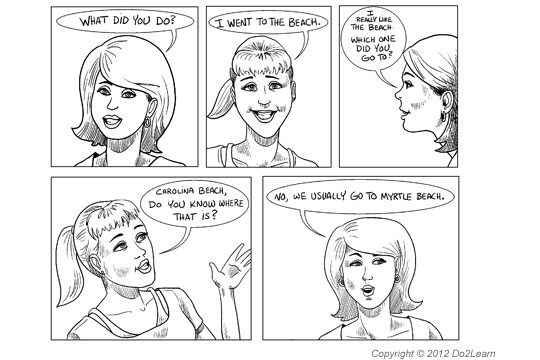
Social narratives are a set of tools that visually represent social situations and appropriate social behaviors. The social narrative connects the important details of a setting or social situation to support the student in understanding the social context and in developing a new social skill.
|
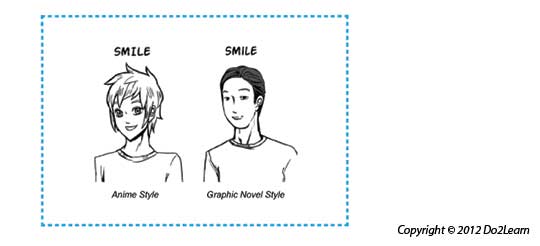
Visual Cues are learning materials that students can keep with them to help guide them through real life situations.
|
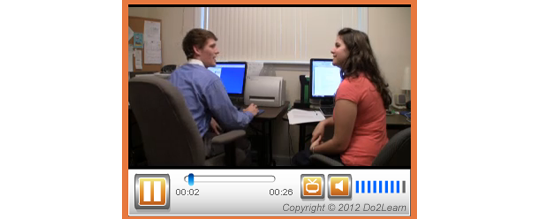
Video modeling involves the use of video recording as a teaching tool. It involves a student watching a video of the appropriate performance of a task (expected behavior) prior to practicing or potentially using the skill in natural settings.
|