Romantic Interests in the Workplace
Romantic relationships within the workplace can be fraught with difficulties, and can often lead to job loss. Romantic behavior, whether reciprocated or not, is almost always inappropriate in a professional context. Maintaining professional behavior means adopting strict rules for personal conduct and relationships with coworkers and supervisors. Instructors should work with students to help them understand the distinctions between a friend, a co-worker, and a romantic interest. Students should be encouraged to discuss appropriate topics of conversation for the workplace, and what kinds of touching are or are not acceptable. Some students will also benefit from strict guidelines on how much contact they can have with co-workers outside of the workplace. Including these skills early and often in the job training curriculum will ensure that students maintain professional behavior in all of their work relationships.

Teaching Ideas
Click on the icons below for detailed information on how to teach this skill.





 Guiding Questions
- Does the student have a framework to understand “friend” vs. “co-worker”? Can the student point to interactions that are associated with friendship?
- How does the student initiate conversations and other social exchanges?
- How does the student react to rejection?
- Does the student use any social media options such as Facebook, Instagram, Snapchat, Linkedin, etc.?
- Does the student have a concept of ‘romantic friend’ (or some other term to signify personal/physical intimacy in a relationship)?
- Does the student understand that topics related to sexual behavior should be avoided in the workplace?
- Does the student understand that expressions of romantic interest should be avoided in the workplace?
Visual Supports
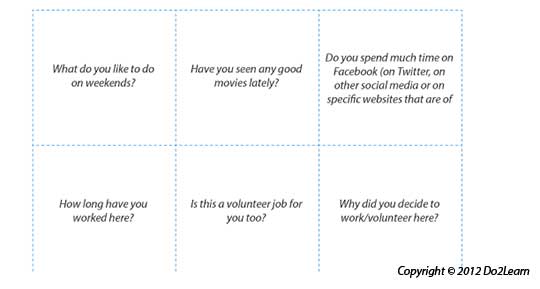
Communication systems and scripts provide the student with a means to initiate communication. Use these cards to practice different scenarios with your students.
|
Schedules are visual supports that organize the school or work day and tell the student where he will go that day. Schedules help focus attention on the sequence of places and events.
|
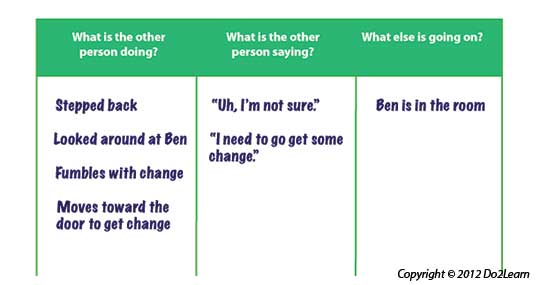
Graphic organizers can provide a student with a way to represent and organize concepts, thoughts, feelings, behaviors, and potential outcomes.
|