Organizing Priorities & Deadlines
Employers rely on their workers to complete tasks on schedule. Sticking to a schedule requires self-organization and priority setting. Students will benefit from learning these advanced time-management skills in steps. Breaking a task down, setting intermediate deadlines, and prioritizing steps are all skills that will contribute to timely task completion. Schedules and planners can help students stay on-track with work and school assignments, and can then avoid the inevitable stress that comes with falling behind.
Teaching Ideas
Click on the icons below for detailed information on how to teach this skill.





 Guiding Questions
- When a deadline is issued (verbally or visually to the group at large or to the individual student), does he recognize that a deadline has been issued?
- When the student recognizes that he has been given a deadline, does he record that information anywhere (in an agenda, mobile device, etc.)? What is his first response to the priority?
- How will he focus and remain calm?
- What strategies and visual supports will he use to map out priorities and deadlines?
- What strategies and visual supports will he use to carry out a plan to complete priorities in a timely and systematic manner?
- In which situations will he seek personal assistance or guidance to address the priorities or deadlines with which he is faced?
Visual Supports
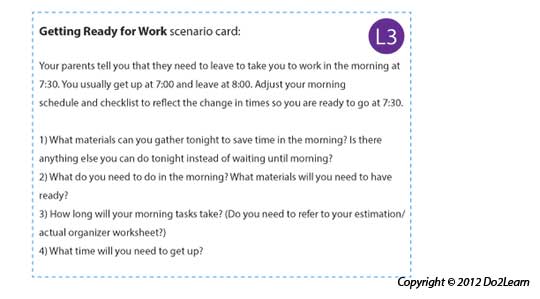
Communication systems and scripts provide the student with a means to initiate communication. Use these cards to practice different scenarios with your students.
|
Schedules are visual supports that organize the school or work day and tell the student where he will go that day. Schedules help focus attention on the sequence of places and events.
|
The to-do list (also referred to as a "work system"or "activity system") visually clarifies a series of activities that a student is to do.
|
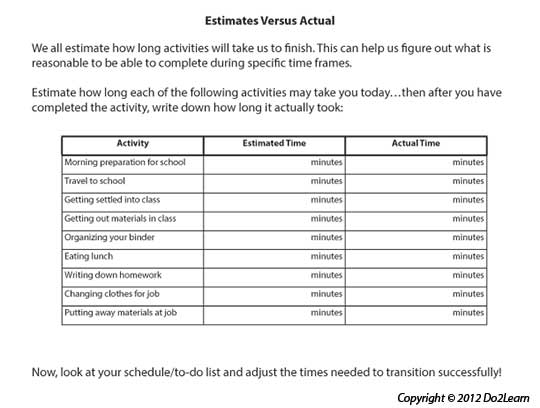
Graphic organizers can provide a student with a way to represent and organize concepts, thoughts, feelings, behaviors, and potential outcomes.
|
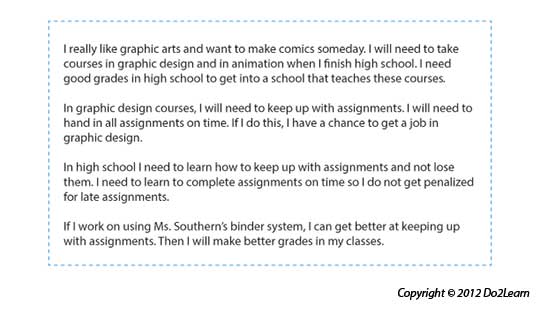
Social narratives are a set of tools that visually represent social situations and appropriate social behaviors. The social narrative connects the important details of a setting or social situation to support the student in understanding the social context and in developing a new social skill.
|
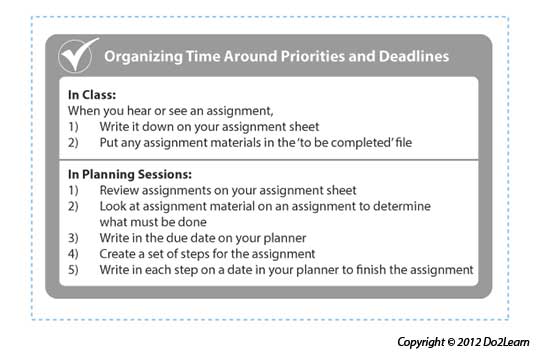
Visual Cues are learning materials that students can keep with them to help guide them through real life situations.
|
|
Video modeling involves the use of video recording as a teaching tool. It involves a student watching a video of the appropriate performance of a task (expected behavior) prior to practicing or potentially using the skill in natural settings.
|