Greetings & Goodbyes
Exchanging greetings and goodbyes is an important social skill. People may find it rude if a student fails to make a greeting or makes greetings that are abrupt, interrupt another conversation, or are inappropriate for the social setting. Some students may not understand the need for social customs related to greetings. Shaking hands, using titles of respect, and common expressions of greeting are all necessary in work, school, and social situations. Students should practice making and responding to greetings using relaxed, confident body language and words suited to the setting. Pleasant greetings and goodbyes provide positive bookends to any interaction.

Teaching Ideas
Click on the icons below for detailed information on how to teach this skill.





 Guiding Questions
- Does this student verbally and/or non-verbally acknowledge greetings and goodbyes when they are directed at him?
- Does this student initiate greetings and/or farewells?
- Does this student display discomfort/awkwardness during the greeting or farewell?
- Is the student’s reciprocal greeting or farewell “proportional” to the counterpart’s greeting? For example, when the counterpart says “It’s so great to see you,” the student reciprocates with “It’s nice to see you too” (instead of saying “yeah”).
- Does this student display appropriate body language, facial expressions, and eye contact approximations during greetings and goodbyes?
- Does this student engage in excessive greetings or goodbyes (i.e. saying hello to everyone, shaking hands with everyone)?
Visual Supports
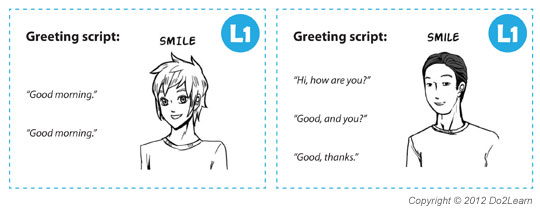
Communication systems and scripts provide the student with a means to initiate communication. Use these cards to practice different scenarios with your students.
|

Graphic organizers can provide a student with a way to represent and organize concepts, thoughts, feelings, behaviors, and potential outcomes.
|
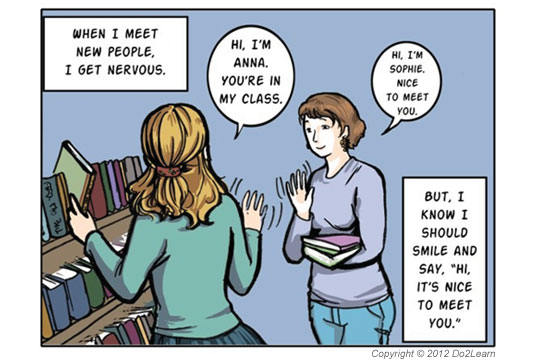
Social narratives are a set of tools that visually represent social situations and appropriate social behaviors. The social narrative connects the important details of a setting or social situation to support the student in understanding the social context and in developing a new social skill.
|
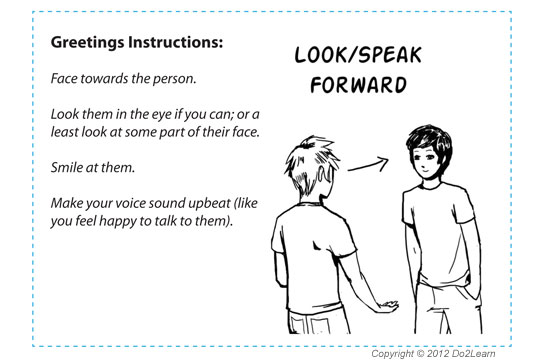
Visual Cues are learning materials that students can keep with them to help guide them through real life situations.
|
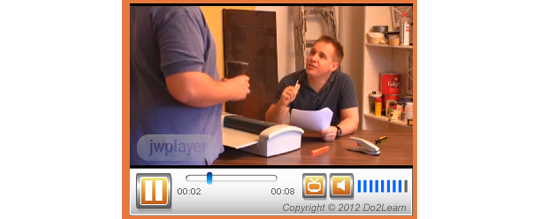
Video modeling involves the use of video recording as a teaching tool. It involves a student watching a video of the appropriate performance of a task (expected behavior) prior to practicing or potentially using the skill in natural settings.
|