
Can the key elements of this skill be appropriately depicted and connected in a social narrative?
Some will apply to or interview for only one job and want to wait for a response, but have no plans as to filling their time in the interim. It will be important for the student to understand that he needs to continue to apply for other positions. A social narrative could be designed to explain why this is the case:
Consider whether the student needs visual clarity cues (e.g. images, bolding, highlighting) added to the social narrative to support comprehension and to promote attention to key details.
Some students may need a social narrative to support them in knowing why they should try to stay calm and polite when they follow-up by phone. Remember that the narrative alone is not likely to produce changes in self-regulation – actual repeated practice is key as well:
Based on the student’s needs and interests, and based on the targeted skill and related concepts, what type of social narrative should you develop – a situational story, coping comic, thought story, and/or coping card?
A coping comic may support some students in dealing with anxiety while waiting to hear from a job by providing some humor, and offering some functional activities to keep them engaged:
How can you visually or thematically incorporate the student’s interests and preferences into this social narrative to increase motivation and engagement?
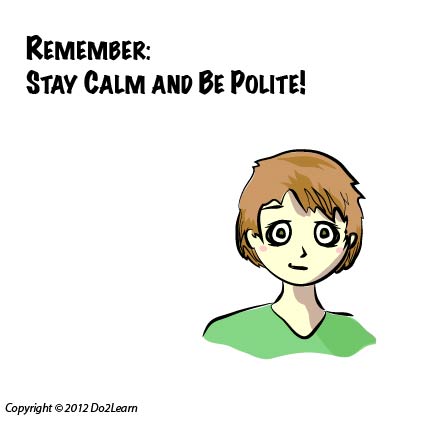
Some students who are still working on their self-regulation skills may need a reminder card near the telephone to refer to before they make that follow-up phone call or email. This could include an image of a favorite person (real or fictional) who endorses the appropriate response:
Can you design the narrative so that it might not only be used in practice settings, but also reviewed independently by the student in generalized settings?
In order to align this intervention topic area with the unique needs of the student, do you need to create a social narrative in the View2do program?
