
Most entry-level positions will either be in nursery retail, on a landscape crew, or in domestic animal care. However, school-based occupational experiences, internships, volunteer positions, and some short-term apprenticeships are excellent work experience options.
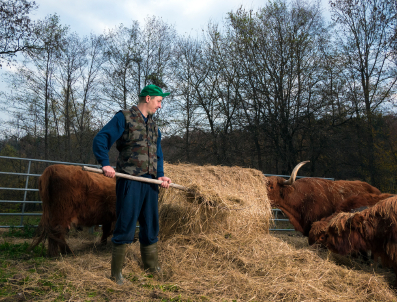 Animal Science and Care:
- Cleaning farm animal quarters
- Farm animal feeding and grooming
- Domestic animal feeding and grooming
- Providing veterinary care assistance: holding, bandaging, medicating, monitoring
- Cleaning/disinfecting domestic animal quarters, exam rooms, and equipment
- Guiding and transporting animals via harness systems, vehicles, and trailers
- Exercising and giving positive attention to animals
- Observing, collecting, and recording data on animal behavior
- Following protocols for animal research studies
- Assisting customers in transporting pets and materials to customer vehicles
- Laundering towels, pet blankets, and bedding
 Nursery Retail:
- Sorting trash and recyclable materials
- Unloading merchandise, sorting, and delivering
- Building plant boxes for transport and storage
- Taking inventory
- Processing, labeling, and displaying merchandise
- Rearranging plants, removing substandard plants
- Trimming and deadheading plants and flowers
- Watering plants on display
- Customer service – loading in car, moving, cashier
- Forklift operation
- Sweeping areas, spray washing floors, wiping down windows and shelves
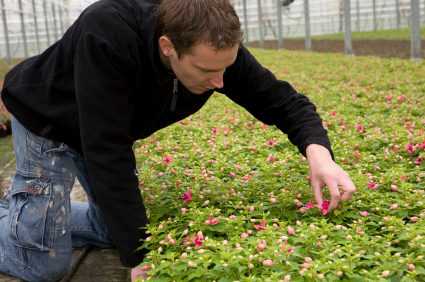 Farm, greenhouse, landscaping crew:
- Trash pickup at site
- Mower, trimmer, blower, edger operation
- Machinery maintenance & small engine repair
- Hand tools: Planting, digging, watering at site
- Picking and packing fruits and vegetables
- Trimming and pruning, weeding
- Removing seasonal plantings
- Fertilizing, seed spreading and pesticide treatment
- Spreading area coverings such as sod, mulch or bark
- Transporting gravel, bricks, mulch, and other landscape material
- Taking inventory of tools and materials
- Landscape design
Does this setting support acceptance of unique behaviors? The instructor’s knowledge of the student’s behavior and preferences is an important key here. If one or more of these settings may fit the student well, you are encouraged to provide individualized adaptations of the Career Planning Self-Assessments. Which of the assessments should you present based on your knowledge of the student?
Your strength and interest assessment options include: 1) Animal Science Skills, 2) Gardening Skills and 3) adaptations of the Retail Sales assessments since nursery work involves sales, display, inventory and customer skills. How can you break the assessments down to prevent the student from being overwhelmed?
Review the student’s self-assessment of his strengths and his projected interests and use the self-assessments to narrow down and define potential jobs that will benefit the student.
Agricultural Sciences Interests – Gardening, Farming, Landscaping
——————————————————————————-
——————————————————————————-
Getting the Job Match
Your experience may be that the student would fit in a nursery retail position with very concrete duties. Or this student may be more engaged by the use of tools and garden machinery. In a landscaping position, will the safety issues in operating machinery and in handling blades for cutting and trimming be problematic? Can the individual follow directions to take machinery apart or carry out a lawn mower oil change, trimmer coil replacement, air filter replacement, etc.? Maybe the student would enjoy looking at animals and learning facts about animals but would struggle when required to actually handle the animals.
Aim at a job in which the student can quickly perform over 80% of job duties independently. This is the aim because Job-Keeping issues, or ‘soft skills,’ are often the major challenges that will require direct instruction and visual supports. For the 20% (or less) of job duties that are a challenge, make sure that the student has emerging or partial abilities with those job duties. Can ‘answering customer questions’ be adapted in a nursery retail position (via a Communication Script) or replaced by other responsibilities that the student can complete successfully? If someone has to teach the student’s performance for longer than a few weeks, is this a good job match? Ongoing monitoring of concrete job skills and job-keeping behaviors will be necessary to assure quality and improvement. However, ongoing teaching of multiple skills in a work setting is not consistent with independent work performance.
In creating the job match, it is critical to consider the activity needs as well as the environmental needs of the student. The balance of variation and routine in farm, greenhouse, nursery and landscape duties will support success for many students since these duties change due to seasonal cycles. Which tasks engage the student’s interests? Will he find satisfaction in the completion of certain duties? If so, how can these be emphasized?
Will the student flourish in an environment where he has several different tasks daily between which he can move (i.e., feeding and giving water to animals, providing exercise routines, cleaning examination rooms, refilling the display case in the waiting room, etc.)? Some people may find that working with animals and plants is less confusing and more predictable than working with people. In general, animal care is highly motivating to a number of individuals despite the environmental factors and the advanced judgments that can be required in safely handling animals and in veterinary care. It is important to pay attention to the number and complexity of duties that are available in the job description. Kennel cleaning duties are potentially very routine, limited and concrete.
Nursery retail chores will have some consistent and some frequently changing tasks. All plant care activities are cyclical and thus summer’s specific tasks are replaced by fall’s chores, plantings, soil preparations and winter’s storage, holiday and pre-spring preparations. As a result, before the task can become tedious, it is replaced with other routine activity yet comes back at least once a year. Judgments in watering often require timing or measuring to prevent over- or under-watering but can be regimented. Heavy lifting of mulch, dirt, compost and farm materials can be structured to provide repetition that serves as aerobic exercise with a clear purpose. Heavy lifting in a nursery site involves carting and moving bags, trays, and plant merchandise in an environment that is often less dirty than the farm yard. However, in these settings are many opportunities for frequently practiced routines around concrete and finite tasks that are easy to structure.
It is often critical to not only observe the skill in that setting, but to also go through the steps of the job yourself and list the steps as a result of performing the task. Listing the steps of a task allows you to identify the potential trouble spots and to develop visual supports that will support student independence. Doing this before expecting the student to perform the skill or task will prevent student, supervisor and instructor frustration and potential failure.
The instructor may feel like s/he does not have time to do this. Not doing so leads to failed job sites. If your goal is positive employment outcomes, find a way to at least observe the task being performed and make the task analysis before expecting the student to perform it.