Personal Space
Working together means sharing space with others, and it is important to know the unwritten rules of personal space. People will be uncomfortable if a co-worker stands too close while speaking to them or touches or hugs them when it is not appropriate. Similarly, giving too much personal space can make conversation difficult, particularly in larger social gatherings. Where should I sit for this meeting? How far away should I stand from someone I’m talking to? Is it okay to give a high-five to my co-worker? Instructors should help students role-play these social interactions, practicing the different kinds of personal space that are expected. Improving a student’s sense of suitable personal space will help them have positive interactions in the workplace and in any social situation.

Teaching Ideas
Click on the icons below for detailed information on how to teach this skill.





 Guiding Questions
- Does the student maintain appropriate physical distance when speaking to someone? Are they too close or too far?
- Does the student appropriately determine when to sit next to someone, versus across from someone, versus two seats down from someone? Does the student maintain appropriate physical distance when seated?
- Does the student engage in awkward or inappropriate physical contact with others (hugging, putting his or her arm around others)?
- Does the student understand that there may be different personal space boundaries for different types of people (i.e., it is okay to hug your mother but not okay to hug your supervisor)?
Visual Supports
|
Communication systems and scripts provide the student with a means to initiate communication. Use these cards to practice different scenarios with your students.
|
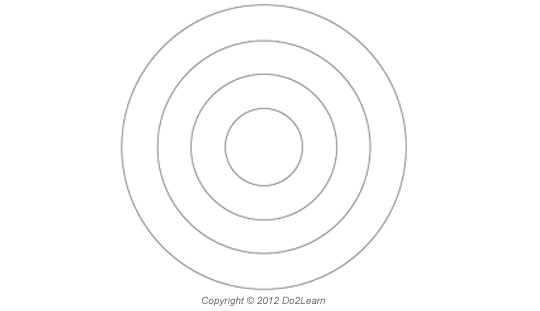
Graphic organizers can provide a student with a way to represent and organize concepts, thoughts, feelings, behaviors, and potential outcomes.
|
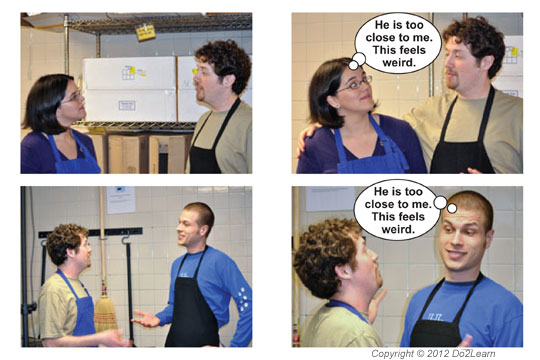
Social narratives are a set of tools that visually represent social situations and appropriate social behaviors. The social narrative connects the important details of a setting or social situation to support the student in understanding the social context and in developing a new social skill.
|
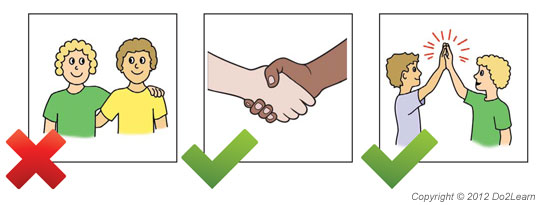
Visual Cues are learning materials that students can keep with them to help guide them through real life situations.
|
|
Video modeling involves the use of video recording as a teaching tool. It involves a student watching a video of the appropriate performance of a task (expected behavior) prior to practicing or potentially using the skill in natural settings.
|
How can I use the environment to set my student up for success?
If the student has difficulty with personal space and is expected to work in close quarters with others, you may be setting them up for failure. Arrange furniture so that chairs are not too close to each other as a preventive measure. Establish a clear location where belongings can be stored.
Instruct the student to sit in chairs rather than sofas to increase their likelihood of maintaining appropriate space.Teach and practice personal space using natural environmental barriers. For example, practicing having a conversation with the student on either side of a desk or table, emphasizing that this is appropriate personal space.
If having a conversation while standing, use a visual cue such as tape on the floor (2 giant steps away, for example) to visually show the person where it is appropriate to stand.
|