Organizing Work Space
Imagine working in a restaurant kitchen where the plates are on one side of the room, trays are on the other side, knives are scattered through three different drawers, and none of the ingredients have labels. It would be almost impossible to make a sandwich! An organized work space ensures that tasks can be completed efficiently and correctly. Disorganization in the work environment can lower productivity and lead to errors or injuries. Students may have a hard time establishing and maintaining the organized systems that are necessary for a tidy work space. Visual organizers, material lists, and checklists of setup and cleanup procedures can all be useful tools for building good organizational habits. By practicing these habits in their work and personal lives, students can enjoy a safer, neater, and more predictable work space.
Teaching Ideas
Click on the icons below for detailed information on how to teach this skill.





 Guiding Questions
- How can I set up the space and materials so that the student can be as productive as possible?
- How can I set up visual supports around the space and materials so that the student can maintain things within easy access and in consistent, predictable locations? What aspects of the space can be defined so that the student sees and knows where everything is?
- How can I set up visual supports so that the student self-monitors space and materials?
- When does the student need to use the visual supports? What cues, instructions and environmental features help the student organize things before, during and after tasks and jobs?
- Can I make sure that the routines of keeping space and materials neat become a consistent part of the work routines in each task or job?
Visual Supports
|
The to-do list (also referred to as a "work system"or "activity system") visually clarifies a series of activities that a student is to do.
|
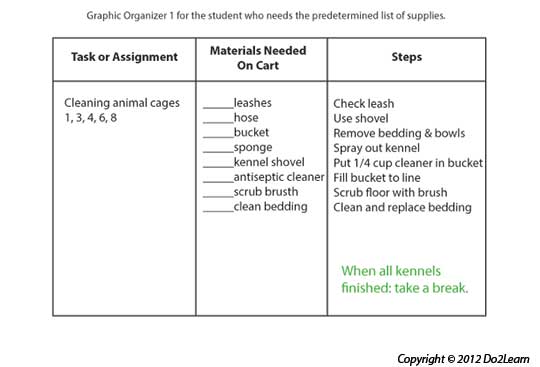
Graphic organizers can provide a student with a way to represent and organize concepts, thoughts, feelings, behaviors, and potential outcomes.
|
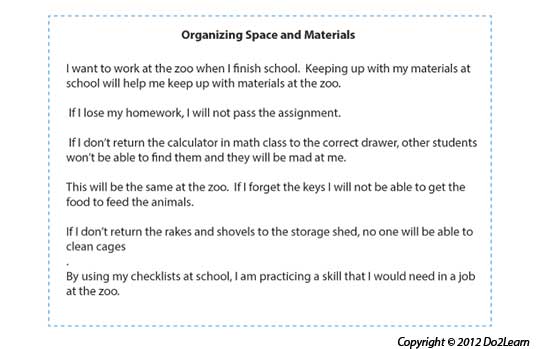
Social narratives are a set of tools that visually represent social situations and appropriate social behaviors. The social narrative connects the important details of a setting or social situation to support the student in understanding the social context and in developing a new social skill.
|
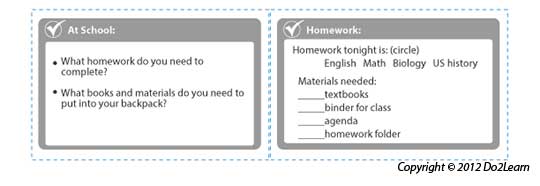
Visual Cues are learning materials that students can keep with them to help guide them through real life situations.
|

Does the design of space and furniture help the student focus on the tasks and behaviors expected in the setting?
Does the environmental design address student issues with proximity to others or even distractibility that may reduce performance (working close to others may set up too much interaction)?
Consider that the close proximity of others may serve to distract certain students from what they are doing, making it likely that the student just puts something down without thinking. In the workspace, is a separate work station conducive to focused performance?
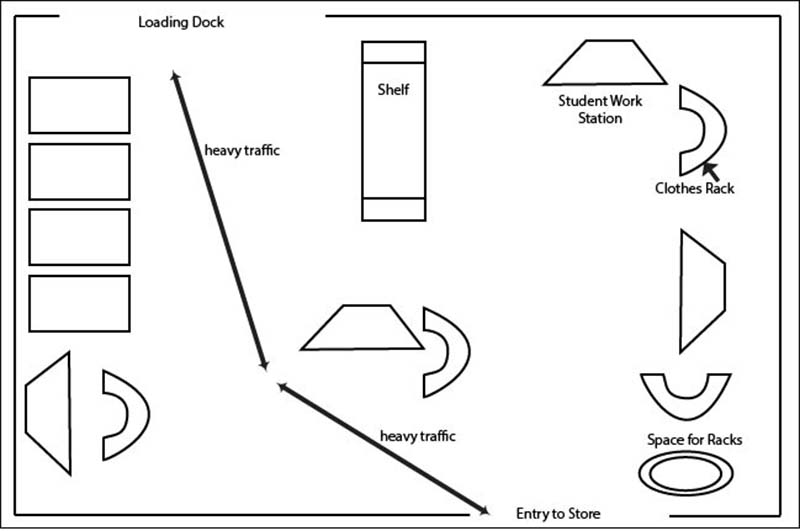
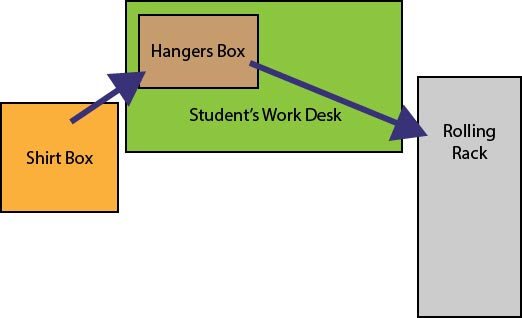
For instance, consider this floor plan of a receiving and processing space in a large retail store. The student’s work station is placed away from heavy traffic and a fair distance from other work stations. It faces the wall and there is a short distance to the pallets from which merchandise is taken for processing as well as a direct line to the door where the rack is taken when all clothing has been processed. The storage shelf stationed to the left of the student’s work station reduces distractions from the heavy traffic area and assists in focusing the student’s attention:
Is the space designed to support independent movement both within and between tasks?
Organization of space may include redesigning the area to reduce distractions and allow the student to focus on completing the work expectations:
- Does the work space or desk need to be moved against a wall, turned around or placed next to a shelf unit or bookcase to help with distractions and organization of materials?
- Would room dividers assist the student in understanding where his work area is and reduce distractions from co-workers?
- Would the addition of tape on the floor give the visual cue to define his area or show where the work cart should be placed when finished?
- Would the use of labeled file boxes placed on a table next to him help the student independently process paperwork?
- Does the desk itself need a “jig” or visual design to assist the student in placing the work material prior to completing the task?
- Do the desk drawers need compartments or labeling to assist in organizing his materials and keeping up with them?
Organization of space and materials both involve the use of visual cues either with furniture and or labeled areas to assist the student in independently and successfully completing school or work expectations. They tend to overlap since a well-organized area that may include visual labeling and cues, can assist the student in staying organized in the specified area.
Are there clear separate spaces for different contexts or sets of activities (i.e., place to take a break vs. work spaces vs. place for belongings, etc.)?
|