
It makes people feel good when they know someone is listening to them and is interested in what they have to say. We show our interest in the way we hold and move our bodies. Body language such as tapping the foot, repeatedly looking at the clock, or crossing the arms indicates that we are bored or irritated, while nodding and smiling can show that we are listening attentively. People expect us to use these standard non-verbal cues to let us know when they are listening. Some students may need to be taught these cues and encouraged to practice using appropriate body language while having a conversation. This can help prevent misinterpretations and ensure others that they are actively listening to the conversation at hand.

Click on the icons below for detailed information on how to teach this skill.





 Guiding Questions
- Is the student able to recognize and interpret the facial expressions or body language of others?
- During interactions, can the student decipher these signs and adjust accordingly? (Ex: you seem bored, so I am changing the subject)
- Does the student integrate nonverbal and verbal communication, or does he tend to display a relatively flat affect with minimal or atypical body language, facial expression, or eye contact?
- Does the student understand the importance of showing interest when others are speaking?
- Do the student’s body language and facial expressions match that of his conversation partner? (Ex: you look excited as you tell me about this, I should show excitement in my face as well)
- How are the student’s other interpersonal skills, such as initiating conversations, adjusting conversational topics, or joining a group? How can his current abilities within those areas support instruction of this topic or help him adapt in interaction?
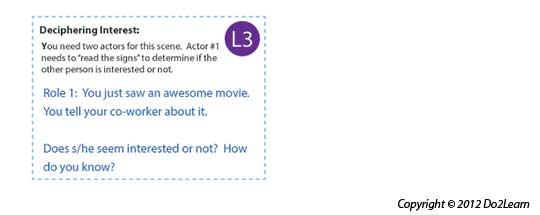
 Communication systems and scripts provide the student with a means to initiate communication. Use these cards to practice different scenarios with your students.
|
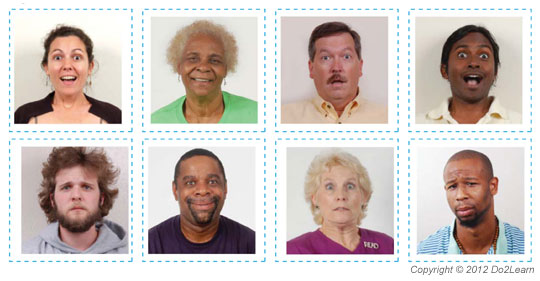
 Graphic organizers can provide a student with a way to represent and organize concepts, thoughts, feelings, behaviors, and potential outcomes.
|
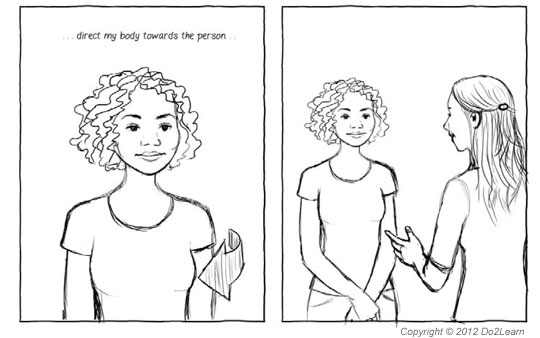
 Social narratives are a set of tools that visually represent social situations and appropriate social behaviors. The social narrative connects the important details of a setting or social situation to support the student in understanding the social context and in developing a new social skill.
|
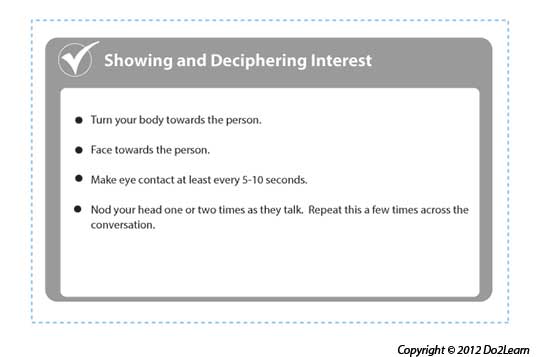
 Visual Cues are learning materials that students can keep with them to help guide them through real life situations.
|
 Video modeling involves the use of video recording as a teaching tool. It involves a student watching a video of the appropriate performance of a task (expected behavior) prior to practicing or potentially using the skill in natural settings.
|
