Finding Online Applications
Online applications are quickly becoming the norm for any job search. Finding, completing, and submitting these applications can be challenging and at times frustrating. Large companies may have complex websites or use application systems with which the applicant may not be familiar. Instructors should work with and encourage students as they learn to navigate these large websites and find and complete applications. This will ensure they have access to the widest variety of job opportunities.

Teaching Ideas
Click on the icons below for detailed information on how to teach this skill.





 Guiding Questions
- What positions (e.g. paid, volunteer, intern, post-secondary) is this student interested in now? How might he obtain an application for that position?
- Is this student familiar with how sites (i.e. large search engines, online newspapers, job-specific websites, corporate websites) differ in terms of purpose and structure?
- Does this student know where job opportunity information is typically housed in a website?
- Does this student know what key terms on a website might signal access to hiring information and application forms?
Visual Supports
|
The to-do list (also referred to as a "work system"or "activity system") visually clarifies a series of activities that a student is to do.
|
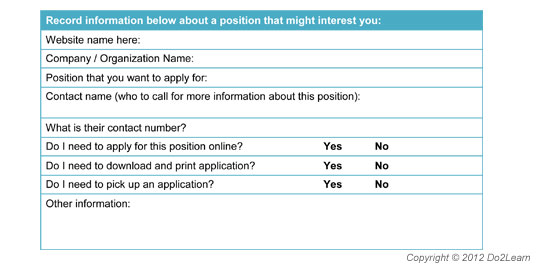
Graphic organizers can provide a student with a way to represent and organize concepts, thoughts, feelings, behaviors, and potential outcomes.
|
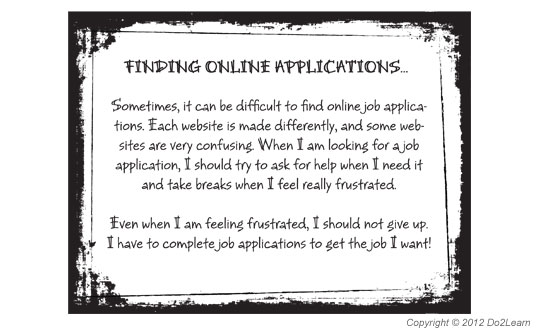
Social narratives are a set of tools that visually represent social situations and appropriate social behaviors. The social narrative connects the important details of a setting or social situation to support the student in understanding the social context and in developing a new social skill.
|
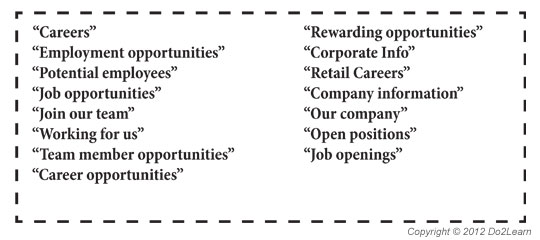
Visual Cues are learning materials that students can keep with them to help guide them through real life situations.
|
Does the design of space and furniture help the student focus on the tasks and behaviors expected in the setting?
Does the environmental design address student issues with proximity to others or even distractibility that may reduce performance (working close to others may set up too much interaction)?
For example, if you target this skill in the media center, consider where this student might be seated. Should he be working in between two other students, or should he work at a station on one end of a row of computers?
|