|
Strategies
It is important to implement strategies that address the needs of the individual. We recommend that you apply these strategies across home, school, and community contexts.
| Learning and Academics |
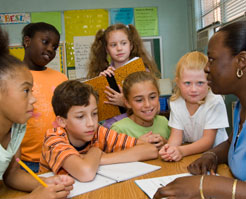 Post a general class schedule that indicates what students should be expected to do as they enter your classroom, when homework is collected, etc. Post a general class schedule that indicates what students should be expected to do as they enter your classroom, when homework is collected, etc.- Before your students enter class, write on the board what will happen during that specific class period and how long each activity will take.
- Develop and maintain an active schedule with evenly intermixed direction instruction, individual seatwork, and cooperative learning activities.
- To prevent student frustration, intersperse more challenging, acquisition-oriented learning activities with review / maintenance-enhancing activities.
- Provide time for the student to catch up on missed work or to review concepts that they are struggling with.
- If the student enters your classroom just after lunch or physical education, it may be necessary to first engage them in a lively class discussion to appropriately “channel” excess distractibility or hyperactivity.
- Use self-monitoring checklists that the student can use to check off activities as completed.
- Break assignments into “chunks” to avoid overwhelming the student.
- Seat student in close proximity to teacher, towards front of the room.
- Provide additional review.
- Teach self-monitoring for attention.
- Use separate setting and/or extended time for exams and tests if needed.
- Explicitly teach test-taking strategies.
- Explicitly teach organizational skills (use of planners, notebooks, folders, checklists).
- Ask previous teachers about techniques that were effective with the student in the past.
- Anticipate classroom situations where the student's emotional state may be vulnerable.
- Be aware of how the student communicates.
- Keep instructions simple and very structured.
- Provide opportunities for group participation.
- Keep classroom organized.
- Serve as a model for the students.
- Provide structure in classroom with regard to physical features of the room, scheduling, routines, and rules of conduct.
- Clearly distinguish time, place, and expectations during unstructured activities.
- Let students know your expectations.
- Provide students with clearly stated learning objectives.
- Use visual supports to supplement verbally delivered instructions and information.
- Seek input from student about his / her strengths and weaknesses.
- Modify classroom activities to meet the learning needs of the student, while maintaining the same learning objectives.
- Be sensitive when pairing students together.
- Keep activity instructions simple but structured.
- Acknowledge contributions of student.
- Be aware of student's socialization skills when asking for participation.
- Make a plan with student to replace inappropriate responses with appropriate responses.
- Work gradually toward group activities.
- Target and teach behaviors such as taking turns, working with partners, and following directions.
- Demonstrate and reward appropriate reading.
- Review and discuss with the student all of the steps involved in activity.
- Give clear examples of what the student should expect with an activity or project.
- Prepare alternative activities that the student can work on independently.
- Collect a portfolio of work samples from the student.
- Teach student how to attribute successes to effective strategy use and effort.
- Monitor student progress through informal assessment.
- Self-monitoring techniques can be used in the school setting. Self-monitoring of attention involves signals to the student to determine how much attention is being paid to a task. This can be done using a signal such as a random beep, timer, or cue provided by the teacher. The student then records on or off task behavior on a recording sheet. Self-monitoring techniques can be tied to rewards and accuracy checks.
|
| Socialization |
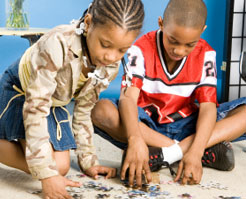 Explicitly and frequently teach social rules and skills. Explicitly and frequently teach social rules and skills.- Model appropriate responses to social situations.
- Engage student in role-play opportunities to practice appropriate responses.
- Explain rules / rationales behind social exchanges.
- Target perspective-taking skills.
- Teach student to accurately label his / her own emotions.
- Teach student to accurately label the emotional status of others (based on facial cues, verbal cues, etc.).
- Be aware of and control for teachers, aides, and students with whom the student interacts negatively.
|
| Behavior |
- Arrange observation and data collection system to monitor student’s behavior across all school contexts.
- Use data to inform decision-making.
- Regularly communicate with family members and teachers to ensure consistent response to student’s behavior.
- Model tolerance and acceptance.
- Provide opportunities for the student to assume responsibilities, such as distributing papers.
- Teach other students to ignore inappropriate attention-seeking behaviors.
- Have other students (who demonstrate appropriate behavior) serve as peer tutors.
- Be aware that some students may work better alone.
- Develop rules that are clear (and give concrete examples).
- Specify rewards for following rules, as well as consequences when rules are disobeyed.
- Be consistent when enforcing rules, emphasize positive over punitive.
- Model responses to potential triggers for escalation.
- Engage student in role-play opportunities to practice appropriate responses.
- Provide models of acceptable behaviors.
- Respond to the student, not to their behavior.
- Use positive and age-appropriate comments frequently to reinforce good behavior.
- Teach students to monitor their own behavior.
- Use individualized behavioral contracts with the student.
- Monitor seating arrangements in the classroom.
- Teach student to identify signs of stress, anxiety, anger, etc.
- Be aware of the student’s triggers for anger, stress, and anxiety.
- Use visual organizers to help student evaluate appropriate alternatives to maladaptive behavior.
- Teach student to describe the conflict or problem, identify possible responses, select a response, and evaluate the selected response.
- “Think out loud” as you generate alternatives and select a response.
- Provide subtle pre-corrective prompts in situations where the student has often displayed interpersonal relationship problems in the past.
- Use visual scales to help the student label escalating emotions (e.g. 1-5 scales, Volcano scale).
- Teach and practice coping strategies to reduce anxiety, stress, anger, etc.
- Develop a coping plan; rehearse plan with student when they are calm.
- Keep potentially harmful objects or substances out of reach.
- Use time-out sessions to cool off disruptive behavior.
- Make sure the punishment fits the "crime."
- Immediately praise good behavior and performance.
- Pre-establish consequences for misbehavior with student.
- Administer consequences immediately.
- Withhold reinforcement for inappropriate behavior.
- Recognize signs of escalation.
- Remain calm, state misconduct, and avoid debating or arguing with student.
- Ask student for reward ideas.
- Change rewards if they are not effective in changing behavior.
- Develop a schedule for using positive reinforcement; work to thin that schedule of reinforcement over time.
- Work for overall improvement, which may be slow.
- If student has a desire for attention, find ways to recognize positive contributions.
- If student shows aggressiveness, being in charge of an activity may reduce aggressiveness.
- Set goals with the student that can realistically be achieved.
- Set up a special time-out location, so student has a place to go to take a break (could be a quick trip to the restroom or water fountain).
- Behavior management techniques can be used in the home, school, and community settings. Functional Behavior Assessments/Behavior Intervention Plans can be created by examining a student's specific problem behavior, identifying antecedents, understanding consequences that maintain the behavior, and developing strategies to reduce the inappropriate behavior and increase desirable behavior.
|
| Affective Characteristics |
 Regularly communicate with family members, guidance counselors, community-based service providers, counselors, etc. Regularly communicate with family members, guidance counselors, community-based service providers, counselors, etc.- Be aware of fears (through communication with the student, teachers, and parents).
- Be aware of medication schedules and what the medication effects may be.
- Be positive and supportive.
- Introduce opportunities for free writing, journaling, or drawing to express feelings.
- Monitor for signs of drug and alcohol use.
- Monitor for signs of self-mutilation (e.g. cutting).
- Monitor for signs of gang involvement.
- Take any threats of suicide seriously; immediately report threats.
|
Medication can be prescribed to address symptoms of mood disorders, psychotic disorders, or anxiety disorders.
|