Agricultural Sciences
Students who enjoy working outdoors or with animals may enjoy a career in the animal and plant care fields. Farms, pet stores, veterinarians, zoos, public gardens, landscaping companies, or nurseries may all offer appealing job opportunities for this type of student. Consider the skills that would be useful in garden and animal care settings. Which of these skills are within his abilities? Which of these would be most interesting to the student?

Teaching Ideas
Click on the icons below for detailed information on how to teach this skill.





 Guiding Questions
- How does this setting fit the strengths and interests of the individual?
- Does the open space and physical activity of these settings fit the behaviors, needs and motivation of this student?
- Will he achieve competence with the specific set of job duties within a short period of time? If not, is it possible to adapt duties so that he can succeed while fulfilling the supervisor’s expectations for quantity and quality of work?
- Am I arranging visual supports so that the student is self-sufficient for the long term?
- Am I careful to avoid requiring too much ‘natural’ support from supervisor and from co-workers?
Visual Supports
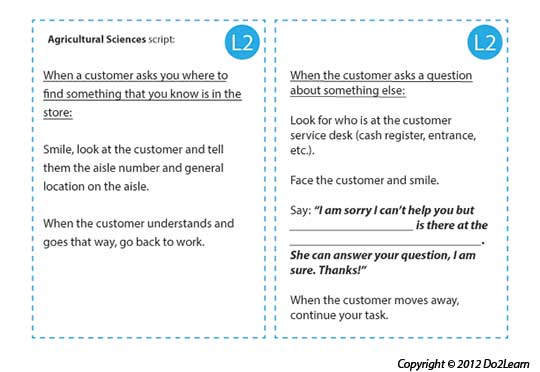
Communication systems and scripts provide the student with a means to initiate communication. Use these cards to practice different scenarios with your students.
|
|
Schedules are visual supports that organize the school or work day and tell the student where he will go that day. Schedules help focus attention on the sequence of places and events.
|
|
The to-do list (also referred to as a "work system"or "activity system") visually clarifies a series of activities that a student is to do.
|
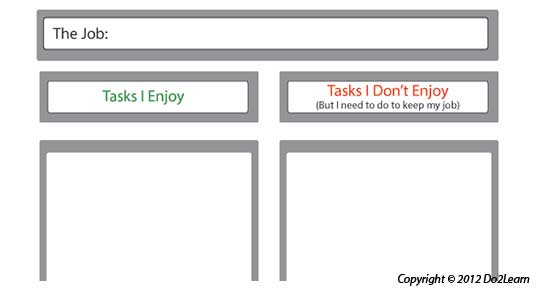
Graphic organizers can provide a student with a way to represent and organize concepts, thoughts, feelings, behaviors, and potential outcomes.
|
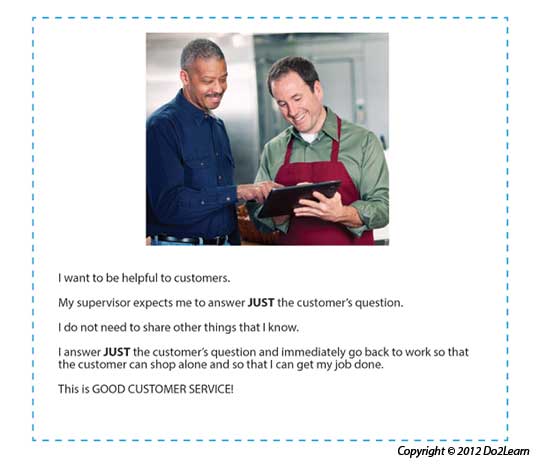
Social narratives are a set of tools that visually represent social situations and appropriate social behaviors. The social narrative connects the important details of a setting or social situation to support the student in understanding the social context and in developing a new social skill.
|
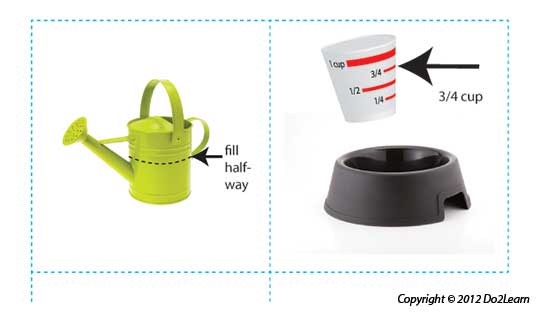
Visual Cues are learning materials that students can keep with them to help guide them through real life situations.
|
|
Video modeling involves the use of video recording as a teaching tool. It involves a student watching a video of the appropriate performance of a task (expected behavior) prior to practicing or potentially using the skill in natural settings.
|

Does the design of space and storage of equipment help the student focus on the tasks and behaviors expected in the setting?
Employers are often very responsive to our efforts to adapt the environment to improve work performance. Organizing equipment storage and labeling spaces will prove beneficial for all employees. Adjusting the storage of protective goggles, ear protection, gloves, etc. close to the door of the equipment room may assure that the student is always using proper safety equipment. If you can see how to organize materials to reduce transition distance and increase worker speed, you are the employer’s best friend. You may need to create a work station in the kennel that makes access to food, water and cleaning tools and supplies easier from the kennels. This can improve speed and quality. There is a good chance that discussion with the employer or supervisor about such adjustments will be met with a willingness to adapt.
Does the environmental design address student issues with proximity to others or even distractibility that may reduce performance (working close to others may set up too much interaction)?
The lifting and movement in a nursery retail site can be productive activity that fits the individual’s need for vigorous activity. However, look at issues of environmental design if you need to reduce interaction with customers. The student may need to consistently have opportunities to inventory merchandise with a scanner or to add merchandise to shelves and retail spaces away from the customer service desk or cash register. Consider scheduling inventory of high-traffic areas of the store during time periods that are off-peak customer hours.
Is the space designed to support independent movement both within and between tasks?
Look carefully at the distance between spaces in a work site. If materials for a task are in two separate areas, these can be reorganized for ease of access and closer proximity to where the work is completed. You can adjust the places where work is done so that the student moves quickly between and within activities. Employers respond positively to suggestions of arrangement that will make workers more efficient.
Are there clear separate spaces for different contexts or sets of activities (i.e., place to take a break vs. work spaces vs. place for belongings, etc.)?
Most employment settings have a separate break and/or lunch area. Having separate spaces for work and for break, for belongings and for lunch, will help in defining what the student does in each space.
|