
Imagine the intensity of frustration building when you are unsure of how to ask for help from a supervisor, do not like when something unexpected happens, or feel uncomfortable during small talk with your co-worker. Without adequate coping skills, stress in the workplace can often build into intolerable levels, leading to frustration and anger. Students may be unable to recognize when they are becoming increasingly frustrated, or they may struggle with regulating their behavior when they feel stressed and angry. If left unaddressed, this mounting stress can lead to work avoidance, repetitive behaviors intended to reduce tension, or even disruptive or destructive verbal or physical outbursts. Any of these can be detrimental to the student’s employment, so instructors must work with students to develop the skills necessary to identify their own stress level and to deal with it in a socially appropriate way.

Click on the icons below for detailed information on how to teach this skill.





 Guiding Questions
- What experiences have the student faced in the past which contribute to his current level of anxiety?
- Is this student aware of the physical signs of anxiety? Can she recognize them in herself when anxious? Can she label them in some way?
- Is the student aware of the possible causes of his anxiety? What are the predictable triggers, causes or antecedents?
- What coping strategies does the student currently deploy when anxious? What coping strategies have proven successful in the past?
- Does the student need to develop any new coping strategies to align with what would be acceptable within a work environment?
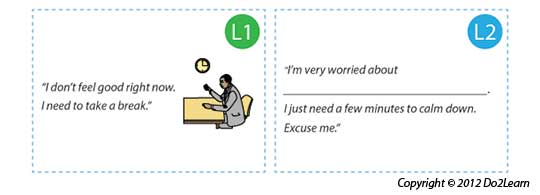
 Communication systems and scripts provide the student with a means to initiate communication. Use these cards to practice different scenarios with your students.
|
 Schedules are visual supports that organize the school or work day and tell the student where he will go that day. Schedules help focus attention on the sequence of places and events.
|
 The to-do list (also referred to as a “work system“or “activity system“) visually clarifies a series of activities that a student is to do.
|
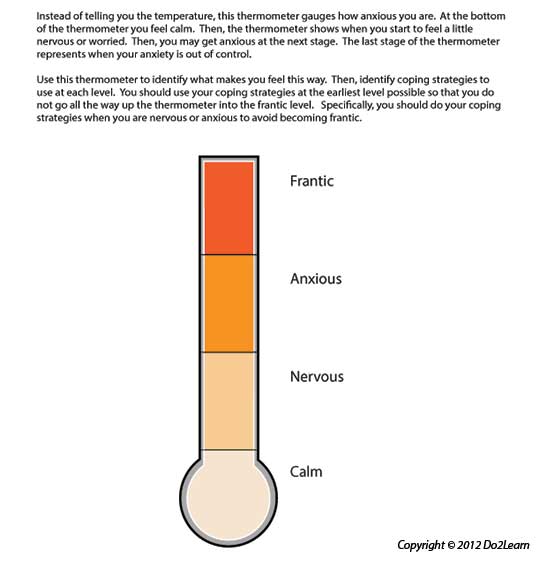
 Graphic organizers can provide a student with a way to represent and organize concepts, thoughts, feelings, behaviors, and potential outcomes.
|
 Social narratives are a set of tools that visually represent social situations and appropriate social behaviors. The social narrative connects the important details of a setting or social situation to support the student in understanding the social context and in developing a new social skill.
|
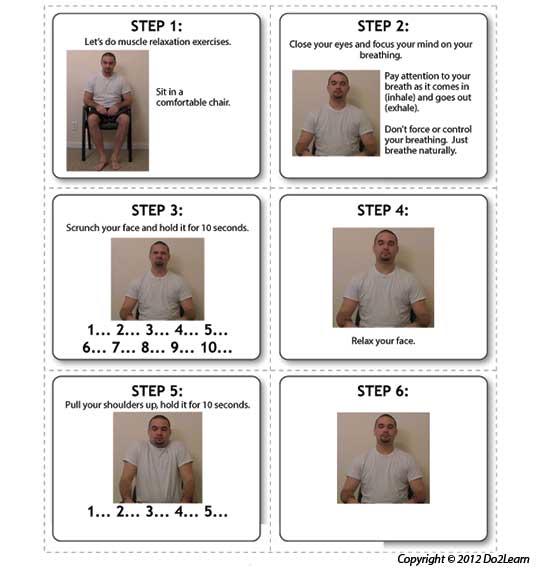
 Visual Cues are learning materials that students can keep with them to help guide them through real life situations.
|
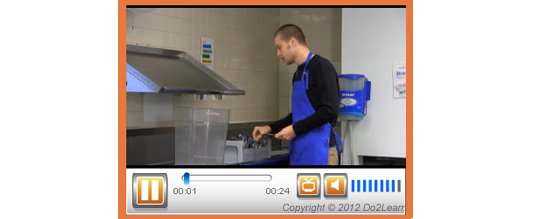
 Video modeling involves the use of video recording as a teaching tool. It involves a student watching a video of the appropriate performance of a task (expected behavior) prior to practicing or potentially using the skill in natural settings.
|
 Does the design of space and furniture help the student avoid obvious antecedents and provide accessible areas for breaks? If the student is easily distracted, by coworkers talking loudly for example, arranging the workspace to provide distance from other workers may be an option. In the classroom, preferential seating should certainly be considered. In many situations, though, modifying the work environment only partially addresses the stress. As an alternative, the student may identify areas at work that are conducive to escaping stressful situations for a quick relaxation exercise, such as a courtyard or restroom. Remember, providing a safe area for the student when learning relaxation techniques in the classroom and in the community is very important. Doing so can also lead to the student developing skills in identifying “safe zones” independently! |
