Entering Conversations
Joining a conversation is an essential social skill, but it can be hard to know when and how to join others who are talking. Joining a private conversation or a conversation with strangers, jumping in rudely, or saying something off-topic may make others annoyed or uncomfortable. Students must know how to read the body language of others and identify when it is okay to join a conversation. Joining conversations correctly is something the student will encounter in every work and social situation, so it is important that they practice this skill. They can then feel confident when they want to join in and talk with others.

Teaching Ideas
Click on the icons below for detailed information on how to teach this skill.





 Guiding Questions
- What is the student’s willingness and comfort level in interacting with other people?
- Can the student read nonverbal cues and context cues to determine if his entrance is welcomed or if he needs to refrain from joining the conversation?
- Does the student recognize how to adjust his verbal and nonverbal behavior when joining in a conversation with people he or she knows versus joining in a conversation with strangers?
- Upon entry into the conversation, does the student understand to pause and not interrupt if someone else is talking?
- Can the student determine if a conversation is personal or professional, formal or informal?
Visual Supports
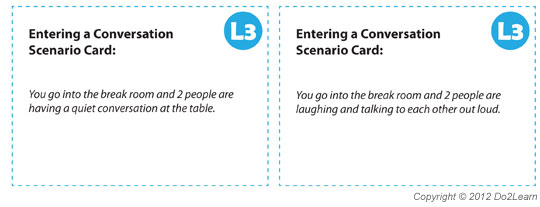
Communication systems and scripts provide the student with a means to initiate communication. Use these cards to practice different scenarios with your students.
|
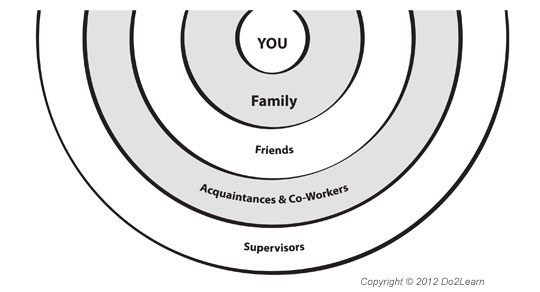
Graphic organizers can provide a student with a way to represent and organize concepts, thoughts, feelings, behaviors, and potential outcomes.
|
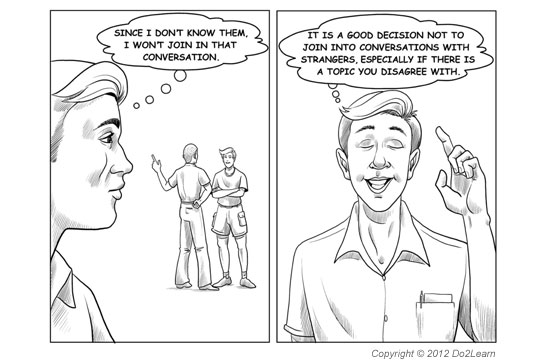
Social narratives are a set of tools that visually represent social situations and appropriate social behaviors. The social narrative connects the important details of a setting or social situation to support the student in understanding the social context and in developing a new social skill.
|
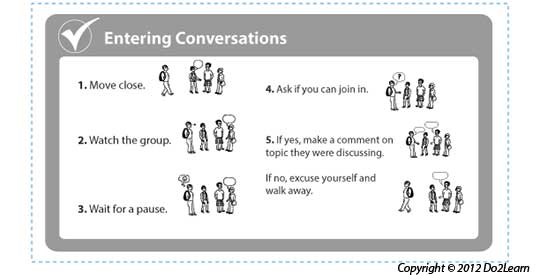
Visual Cues are learning materials that students can keep with them to help guide them through real life situations.
|
|
Video modeling involves the use of video recording as a teaching tool. It involves a student watching a video of the appropriate performance of a task (expected behavior) prior to practicing or potentially using the skill in natural settings.
|