Calling In Sick
Even the best employee will need to take time off from work occasionally. Missing work for an unplanned illness or emergency or a planned vacation or appointment are all important to self-care. The employee must be familiar with the policies of their workplace and know how to inform their employer of the absence to avoid disciplinary action. Students may struggle with knowing when it is acceptable to call in sick, knowing whom to contact for planned absences, or judging when a request for time off is appropriate. Students may feel stressed when faced with missing work, but instructors can help them learn to navigate the process of notifying their employer of the absence. They can then feel more confident knowing that they have managed their work absence professionally.

Teaching Ideas
Click on the icons below for detailed information on how to teach this skill.





 Guiding Questions
- Does the student have any medical or other conditions that are chronic or recurring which might cause him to call in sick at a higher frequency?
- Is this student able to accurately assess when he is ill or not feeling well?
- Does this student have basic skills for communicating via telephone? If not, does he use adaptive technology or other methods for telecommunicating (email, type-to-talk phone service, etc.)?
- Is the student inclined to frequently miss school or work when he is not actually sick (but instead tired, avoidant, etc.)?
- Can the student distinguish between an unexpected event that would be viewed by others as a valid reason for missing work (illness, accident, family emergency, transportation failure) versus an event that would not be perceived by others as necessitating missed work?
- To what degree can the student recognize how a pattern of behavior (steady attendance versus repeated missed days with “weak” excuses) might impact how he is perceived by instructors, supervisors, etc.?
- What time-management and scheduling tools does the student use to record and recall future events (e.g. appointments, trips) that would necessitate time-off requests?
Visual Supports
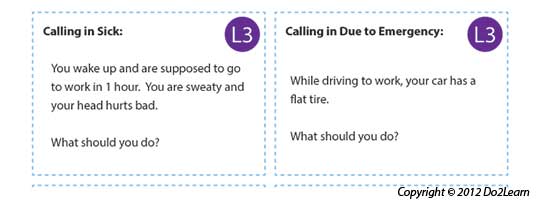
Communication systems and scripts provide the student with a means to initiate communication. Use these cards to practice different scenarios with your students.
|
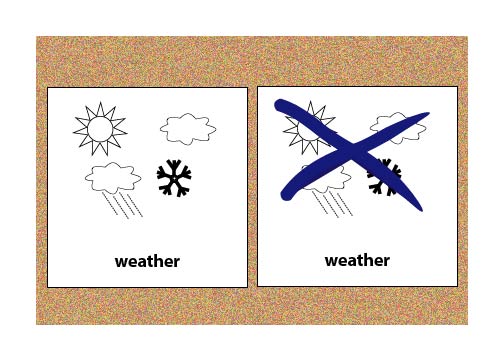
Schedules are visual supports that organize the school or work day and tell the student where he will go that day. Schedules help focus attention on the sequence of places and events.
|
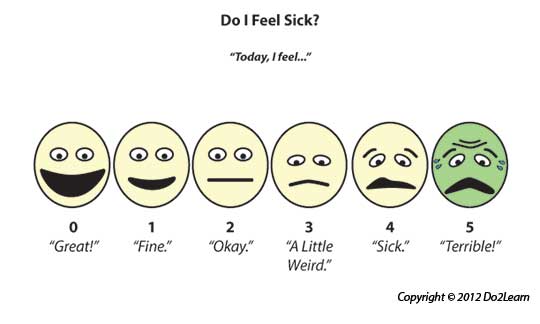
Graphic organizers can provide a student with a way to represent and organize concepts, thoughts, feelings, behaviors, and potential outcomes.
|
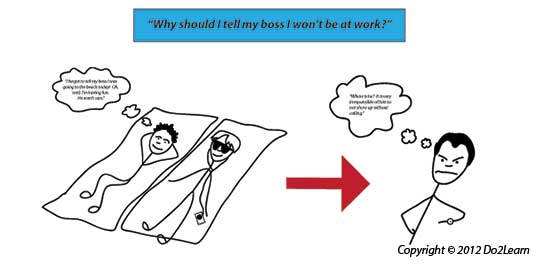
Social narratives are a set of tools that visually represent social situations and appropriate social behaviors. The social narrative connects the important details of a setting or social situation to support the student in understanding the social context and in developing a new social skill.
|
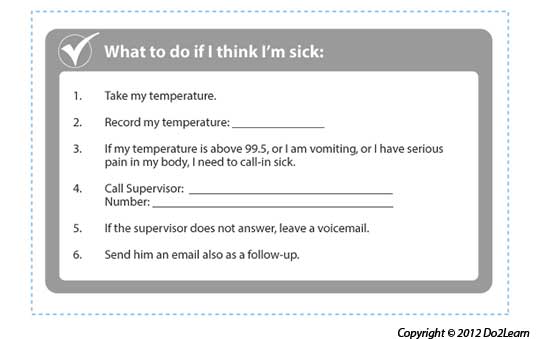
Visual Cues are learning materials that students can keep with them to help guide them through real life situations.
|
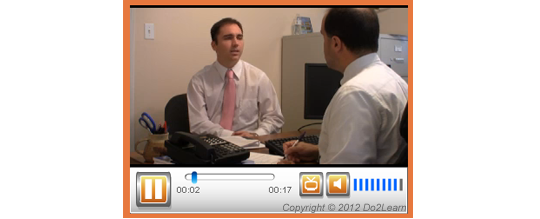
Video modeling involves the use of video recording as a teaching tool. It involves a student watching a video of the appropriate performance of a task (expected behavior) prior to practicing or potentially using the skill in natural settings.
|