Resumes and Portfolios
A major piece of the job application process is developing a resume, and perhaps a portfolio of previous work. A good resume provides a short, organized summary of an applicant’s job and educational history, while a portfolio can show off the best examples of that work. A well-written and carefully crafted resume shows that an applicant is professional, attentive to details, and has the qualifications necessary for the job. Making a competitive resume for the job market requires planning, hierarchical organization and summary of large amounts of information, and attention to details such as proofreading and typesetting. Students may struggle with any of these steps, but with guidance can produce a resume that shows off their unique skills and experiences to their best advantage.

Teaching Ideas
Click on the icons below for detailed information on how to teach this skill.





 Guiding Questions
- Does the student understand the purpose of a resume?
- Does the student have a current resume which can be edited, or is this his first attempt?
- Will this resume emphasize academics, and volunteer and extracurricular experiences if the student has not yet had paid employment?
- Does the student struggle to express his ideas in a clear, succinct manner and without straying away from the central focus?
- Will the student be able to exhibit the flexibility necessary for proofreading and adjusting his written work to meet the needs of a specific application?
- Does this student need to gather samples of his best work (a portfolio) to submit for consideration to a particular internship, job, or post-secondary institution? If so, will he struggle to select the samples that are the best, and that align with the priorities of the position to which he is applying?
Visual Supports
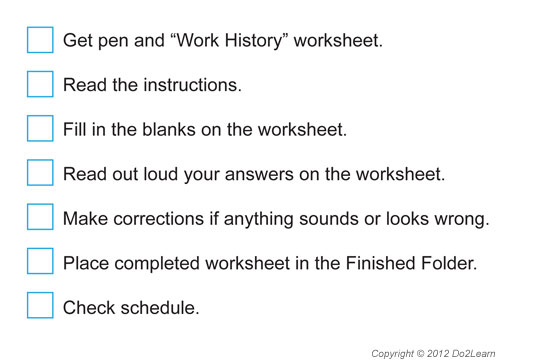
The to-do list (also referred to as a "work system"or "activity system") visually clarifies a series of activities that a student is to do.
|
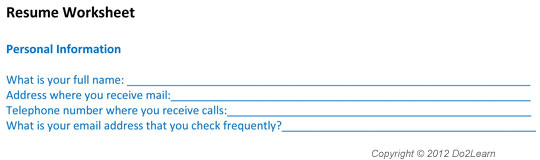
Graphic organizers can provide a student with a way to represent and organize concepts, thoughts, feelings, behaviors, and potential outcomes.
|
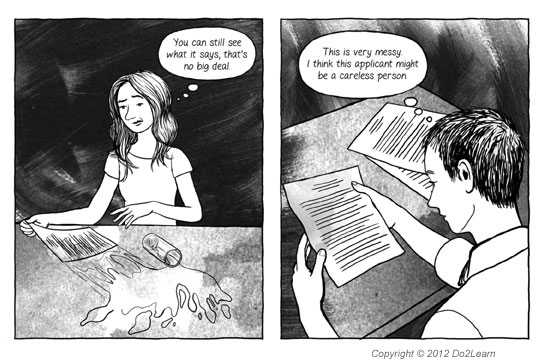
Social narratives are a set of tools that visually represent social situations and appropriate social behaviors. The social narrative connects the important details of a setting or social situation to support the student in understanding the social context and in developing a new social skill.
|
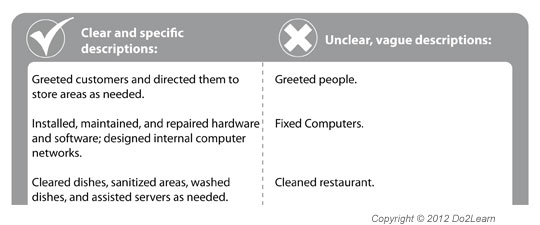
Visual Cues are learning materials that students can keep with them to help guide them through real life situations.
|