Anger & Frustration
Imagine the intensity of frustration building when you are unsure of how to ask for help from a supervisor, do not like when something unexpected happens, or feel uncomfortable during small talk with your co-worker. Without adequate coping skills, stress in the workplace can often build into intolerable levels, leading to frustration and anger. Students may be unable to recognize when they are becoming increasingly frustrated, or they may struggle with regulating their behavior when they feel stressed and angry. If left unaddressed, this mounting stress can lead to work avoidance, repetitive behaviors intended to reduce tension, or even disruptive or destructive verbal or physical outbursts. Any of these can be detrimental to the student’s employment, so instructors must work with students to develop the skills necessary to identify their own stress level and to deal with it in a socially appropriate way.

Teaching Ideas
Click on the icons below for detailed information on how to teach this skill.





 Guiding Questions
- Does the student recognize when he is angry or frustrated?
- Does the student recognize different levels or degrees of anger or frustration?
- What triggers anger or frustration in this student? Is the student aware of these triggers? Can he identify them?
- How does the student cope with frustration? How does the student cope with anger?
- What type of coping skills does the student have? Are there already strategies that have been taught to address anxiety?
- What does the student find soothing or calming? What are the student’s strong interests, and can these be incorporated into a calm-down routine or plan?
Visual Supports
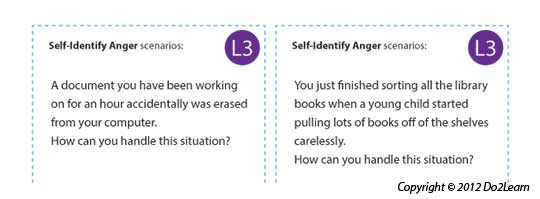
Communication systems and scripts provide the student with a means to initiate communication. Use these cards to practice different scenarios with your students.
|
|
Schedules are visual supports that organize the school or work day and tell the student where he will go that day. Schedules help focus attention on the sequence of places and events.
|
|
The to-do list (also referred to as a "work system"or "activity system") visually clarifies a series of activities that a student is to do.
|
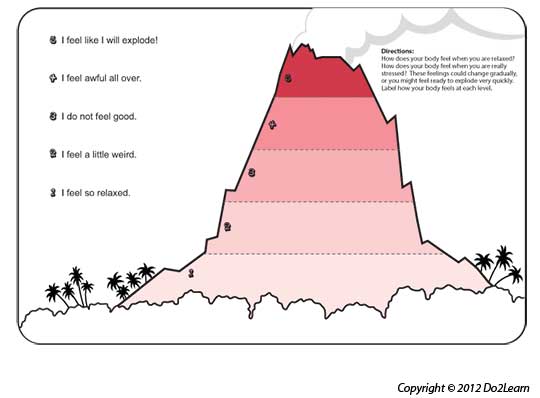
Graphic organizers can provide a student with a way to represent and organize concepts, thoughts, feelings, behaviors, and potential outcomes.
|
|
Social narratives are a set of tools that visually represent social situations and appropriate social behaviors. The social narrative connects the important details of a setting or social situation to support the student in understanding the social context and in developing a new social skill.
|
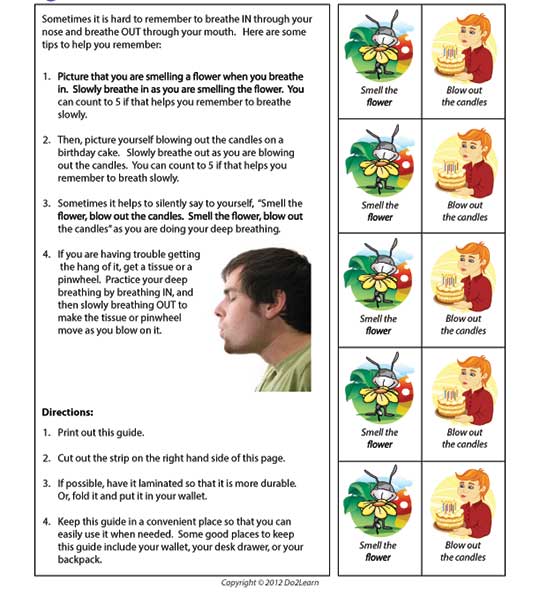
Visual Cues are learning materials that students can keep with them to help guide them through real life situations.
|
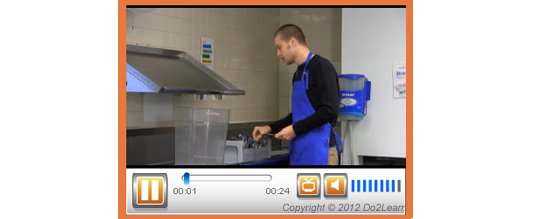
Video modeling involves the use of video recording as a teaching tool. It involves a student watching a video of the appropriate performance of a task (expected behavior) prior to practicing or potentially using the skill in natural settings.
|

Does the design of space and furniture help the student focus on the tasks and behaviors expected in the setting?
If the student is easily distracted or disrupted by their surroundings, they may become frustrated because of their difficulty concentrating. Or, perhaps they are submitting unsatisfactory work due to a distracting environment in which they receive negative feedback, and therefore become angry. Thus, design the student’s work space so that it is conducive to his work needs. Make sure stimuli are minimized by having the student face the wall or be blocked from distractions by large bookshelves or dividers. Auditory stimuli should also be minimized by providing the student with a quiet work area, or headphones to wear if necessary.
In order for their work session to be successful, sometimes modifications may need to be made to the task after the student has practiced his coping plan. For example, if the trigger was loud noise, you may need to find a quiet place for the student to work after he successfully follows the coping plan. If the trigger was a non-preferred task, you may need to find a way to shorten or gear it more to their learning style (How can the task make more sense to them? Do the instructions need to be clearer? Does the task/instructions need to be more visual?) Again, note that you are reinforcing the student for using his plan and not becoming angry when you adjust the environment after coping.
Are there clear separate spaces for different contexts or sets of activities (i.e., place to take a break vs. work spaces vs. place for belongings, etc.)?
The student may need a separate place to go when they need to calm down. This place should preferably be quiet and away from others. This place may be an office, break room, bathroom, outside courtyard, or even his car, depending on what the school or work environment has to offer.
|