Retail Operations
The world of business offers many types of jobs, from entry-level positions to more advanced management and entrepreneurship opportunities. Entry-level positions in retail settings provide an excellent introduction to business operations, from stocking and inventory to marketing to customer service. Because retail settings offer such a wide array of activities, from the predictable, such as sorting and folding merchandise, to the more unexpected, such as handling customer complaints, there are positions available for students at all skill levels. When combined with extracurricular or volunteer experiences with business clubs or small business startup projects, a student can become well versed in what it takes to run a successful business.

Teaching Ideas
Click on the icons below for detailed information on how to teach this skill.





 Guiding Questions
- Know the skill sets that are expected in the position!
- Will this environment fit the student’s strengths and interests?
- Will the environment provide either too much or too little stimulation, thus interfering with performance?
- Will the student achieve competence with the specific set of job duties within this job in a short period of time? If not, is it possible to adapt duties so that he can succeed while fulfilling the supervisor’s expectations for quantity and quality of work?
- Am I arranging visual supports so that the student is self-sufficient for the long term?
- Am I careful to avoid requiring too much ‘natural’ support from supervisors and co-workers?
Visual Supports
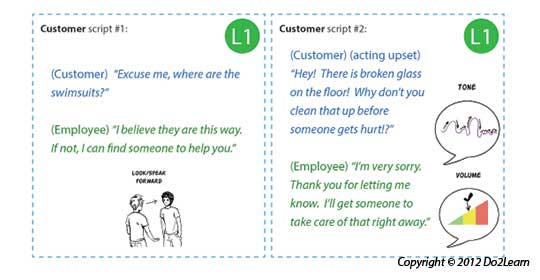
Communication systems and scripts provide the student with a means to initiate communication. Use these cards to practice different scenarios with your students.
|
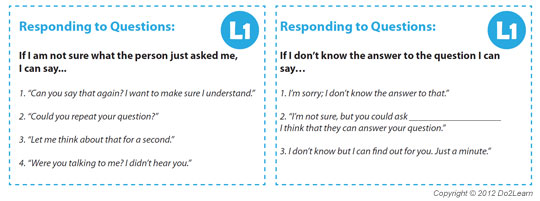
Schedules are visual supports that organize the school or work day and tell the student where he will go that day. Schedules help focus attention on the sequence of places and events.
|
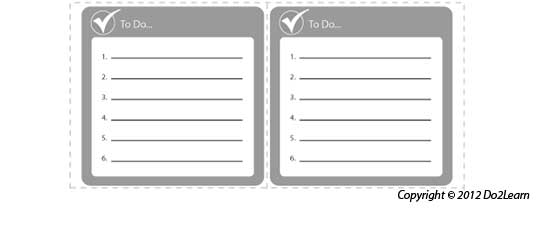
The to-do list (also referred to as a "work system"or "activity system") visually clarifies a series of activities that a student is to do.
|
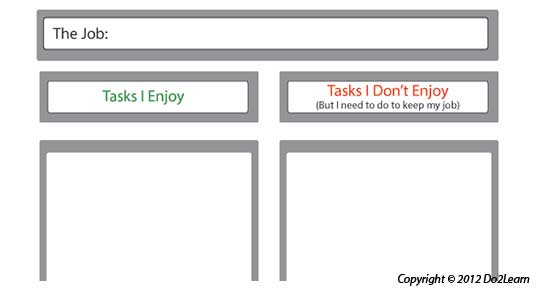
Graphic organizers can provide a student with a way to represent and organize concepts, thoughts, feelings, behaviors, and potential outcomes.
|
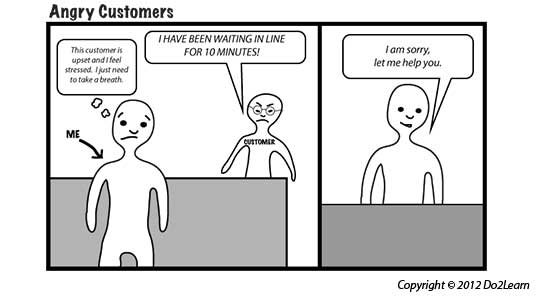
Social narratives are a set of tools that visually represent social situations and appropriate social behaviors. The social narrative connects the important details of a setting or social situation to support the student in understanding the social context and in developing a new social skill.
|
|
Visual Cues are learning materials that students can keep with them to help guide them through real life situations.
|
|
Video modeling involves the use of video recording as a teaching tool. It involves a student watching a video of the appropriate performance of a task (expected behavior) prior to practicing or potentially using the skill in natural settings.
|

Does the design of space and furniture help the student focus on the tasks and behaviors expected in the setting?
Processing of merchandise lends itself naturally to developing a clear work station that focuses the individual’s attention on his work. Shipping operations, as well as some office accounting and business positions, are conducive to a work station that reduces the necessity for extra movements that may slow work speed. Moving a work station to a remote corner or adding a partition in a key spot near a heavily trafficked area will often improve speed and quality. Turning a workstation so that the student is facing a wall may support performance. Look for natural alcoves to create work spaces. Employers or supervisors are likely to appreciate a discussion which leads to adjustments that may improve work performance.
Note that shipping and receiving jobs may be located in large ‘warehouse type’ environments that can be active, noisy or over-stimulating. Containing the space by creating a work station can reduce distractions and stimulation to support work. The use of work tables, hanging racks, even partitions made of storage boxes have all been used to focus performance in a large warehouse setting.
At the same time, your assessment of the design of the work space must include attention to the amount of movement expected and to reducing distances between and within activities. Many shipping and receiving jobs involve long periods of standing as well as movements to obtain and to send merchandise to its next location. While movement is often desirable for ‘active’ individuals, making this movement as consistent and specific as possible is equally desirable in preventing unnecessary interactions and distractions.
Is the space designed to support independent movement both within and between tasks?
Look carefully at the distance between spaces in a work site. If materials for a task are in two separate areas, these may be reorganized for ease of access and closer proximity to where the work is completed. For instance, the set of shelves close to the student’s work station may hold a variety of materials that are needed at times in processing. You may be able to adjust the places where work is done so that the student moves quickly between and within activities. Employers respond positively to suggestions of arrangement that will make workers more efficient.
Are there clear separate spaces for different contexts or sets of activities (i.e., place to take a break vs. work spaces vs. place for belongings, etc.)?
Most employment settings have a separate break and/or lunch area. Having separate spaces for work and for break, for belongings and for lunch, will help in defining what the student does in each space. If a site does NOT have clearly defined spaces, it may be worthwhile to consider how to create this organization of space for the individual. The individual may suggest to you that it is okay to take a break in the work area. However, the instructor should consider how likely certain scenarios may occur in disorganized spaces. If the individual does not have a consistent place to put belongings and they get lost, what are the repercussions? If an individual has any confusion around meal behaviors, break behaviors and work rules, what happens when work spaces and break spaces are the same place? The individual may be more susceptible to confusion on the differing rules in these contexts. The clearly defined space will support the student’s performance throughout the day. Confusion of this kind can pose a problem in sustaining a positive employment record.
|