|
Chronic misunderstanding of nonverbal cues
- Make sure that the verbal message matches with the nonverbal
signals when talking with a student.
Example: Don't smile at a child when correcting bad behavior.
- Provide direct instruction on how to notice what body position,
vocal intonation, and gestures imply. Children with special needs may confuse
gestures and need to have the meanings explicitly explained.
Example: Tell a child that when you look at him and place your
hands on your hips and shake your head left to right,
it means that what he is doing is wrong and he needs to
stop doing it.
- Provide practice understanding non-verbal cues in a non-threatening
environment. Since non-verbal cues are usually linked to physical
responses from others, they can be stressful. Examples to practice online stratgies.:
The Feelings Game,
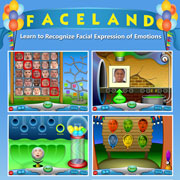
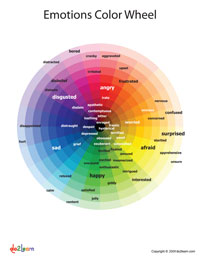
Emotions Color Wheel, and Faceland games demonstrate facial emotions
|