Giving Praise & Compliments
Most people enjoy receiving praise or compliments on their accomplishments, possessions, and appearance. Giving praise and compliments can build friendships, open lines of communication, and reduce tension in a relationship. Plus, it can make people happy! It may be hard for some students to know when and how to give this kind of positive attention to their co-workers. Students must know what things are acceptable to compliment someone on, when compliments might be inappropriate, and what to say when giving praise. Practicing giving compliments in work and social environments will prevent awkward exchanges and allow them to share these positive expressions with others.

Teaching Ideas
Click on the icons below for detailed information on how to teach this skill.





 Guiding Questions
- Does the student realize why it can be important to give praise or a compliment to another person?
- Can the student attribute traits and behaviors to another person and describe those behaviors with an element of praise?
- Does the student have an understanding of appropriate things to compliment?
- Is the student able to deliver praise or a compliment sincerely?
- Does the student choose the right place and right time to give praise or a compliment so as not to create an awkward social moment?
- Is the student able to limit praise or compliments or does he have difficulty in knowing when to stop or how much to say?
Visual Supports
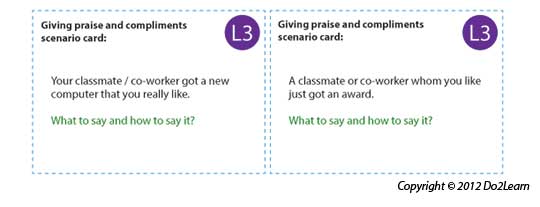
Communication systems and scripts provide the student with a means to initiate communication. Use these cards to practice different scenarios with your students.
|
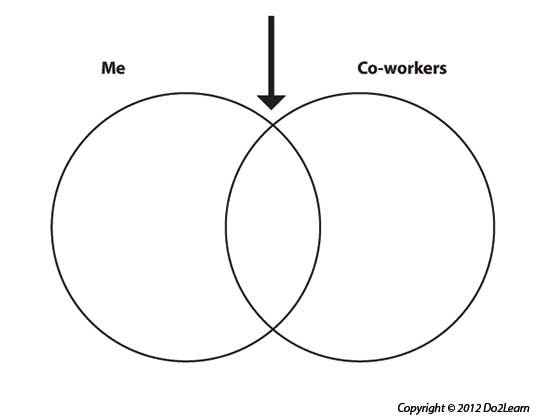
Graphic organizers can provide a student with a way to represent and organize concepts, thoughts, feelings, behaviors, and potential outcomes.
|
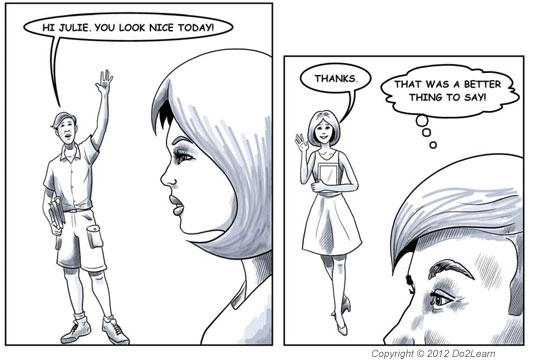
Social narratives are a set of tools that visually represent social situations and appropriate social behaviors. The social narrative connects the important details of a setting or social situation to support the student in understanding the social context and in developing a new social skill.
|
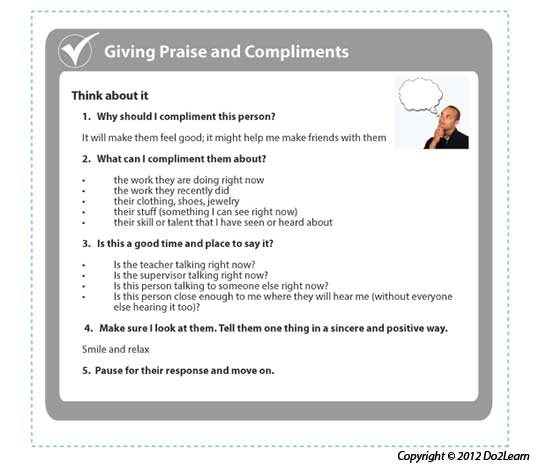
Visual Cues are learning materials that students can keep with them to help guide them through real life situations.
|
|
Video modeling involves the use of video recording as a teaching tool. It involves a student watching a video of the appropriate performance of a task (expected behavior) prior to practicing or potentially using the skill in natural settings.
|