Responding To Comments & Praise
Gracefully accepting and responding to comments and praise is an important part of interacting with others. Some students may find this difficult, either because they are embarrassed by the positive attention or because they prefer not to be interrupted from their work or activity by something they see as unimportant. In order to act cooperatively in work and social situations, students must learn to acknowledge comments and praise with polite attention and responses. Using appropriate voice volume, offering gestures such as a smile or nod, and a giving brief response related to the compliment are all skills that can ensure the student continues to receive praise from others!

Teaching Ideas
Click on the icons below for detailed information on how to teach this skill.





 Guiding Questions
- Does the student understand what a compliment is and the importance of responding appropriately in any interaction?
- Are the student’s verbal responses limited by difficulty processing verbal information or questions?
- Is the student attending to non-verbal cues (body orientation, eye contact, voice volume, other environmental cues) to determine if someone is talking to him?
- Does the student have verbal coping strategies to assure that he understands what is said?
- In the case of a comment, can the student relate this to his own experience and share his own impression or reaction to the comment in a positive way?
- In the case of a compliment, can the student react with an expression of acceptance or gratitude along with the non-verbal cues of a smile, a nod or brief eye contact?
Visual Supports
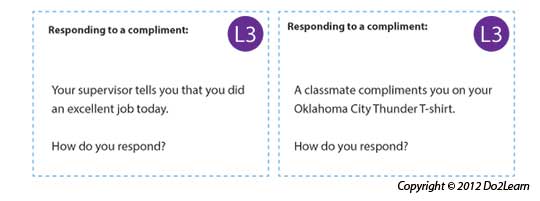
Communication systems and scripts provide the student with a means to initiate communication. Use these cards to practice different scenarios with your students.
|
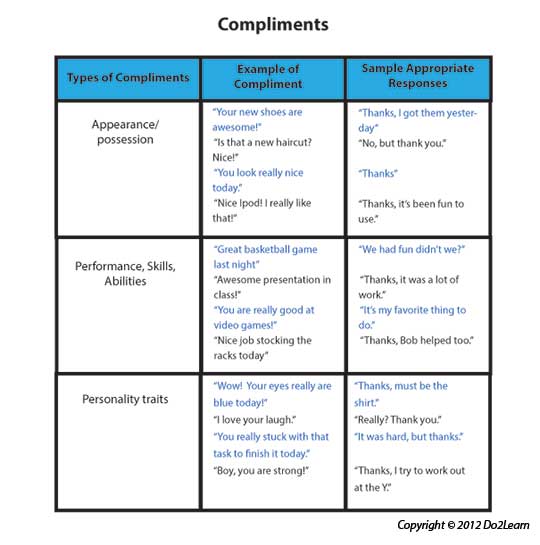
Graphic organizers can provide a student with a way to represent and organize concepts, thoughts, feelings, behaviors, and potential outcomes.
|
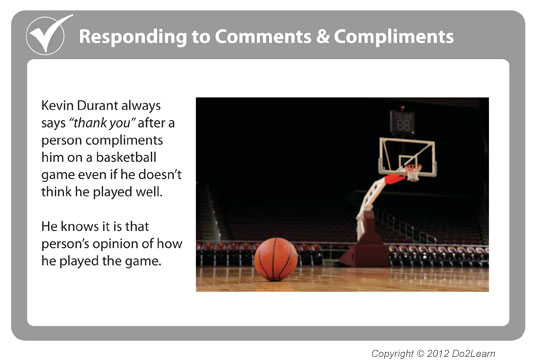
Social narratives are a set of tools that visually represent social situations and appropriate social behaviors. The social narrative connects the important details of a setting or social situation to support the student in understanding the social context and in developing a new social skill.
|
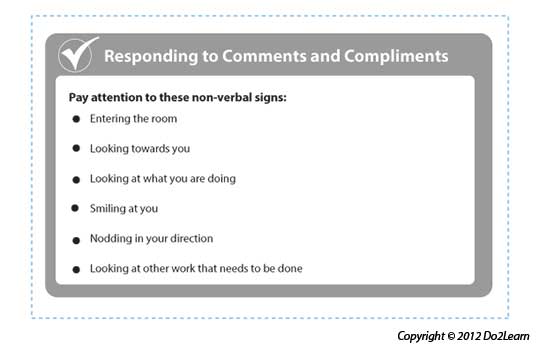
Visual Cues are learning materials that students can keep with them to help guide them through real life situations.
|
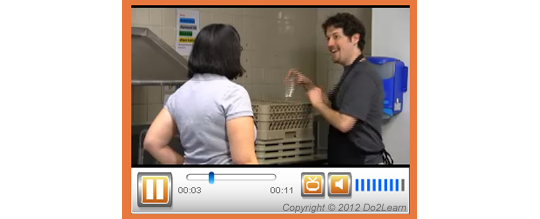
Video modeling involves the use of video recording as a teaching tool. It involves a student watching a video of the appropriate performance of a task (expected behavior) prior to practicing or potentially using the skill in natural settings.
|