
 |
Getting a Job
Interviews
Before the Interview - Rehearse Responses
In an interview, you will be asked some questions. The interviewer is trying to learn whether you would be good for the position based on your responses to the interview questions. You might be asked some standard interview questions, as well as some behavioral questions. Every interview is different, so it is impossible to say exactly how many questions you will be asked, or what type of questions you will be asked. Much of this depends on the level and type of job that you are applying for.
Some of the questions that they ask you might seem unclear or imprecise, but coming up with responses beforehand and rehearsing them out loud can help prepare you for these questions. It is important to rehearse what you will say, and how you will say it. This includes rehearsing your tone of voice, eye contact, and facial expressions.
Ways to make rehearsing fun:
 Practice answering questions with a family member, friend, counselor, or other helper who would give you honest feedback about ways to improve your answers and your interpersonal behaviors. Role-play with this person—they can be the "interviewer" who asks you questions, and you can be the "interviewee." Practice answering questions with a family member, friend, counselor, or other helper who would give you honest feedback about ways to improve your answers and your interpersonal behaviors. Role-play with this person—they can be the "interviewer" who asks you questions, and you can be the "interviewee."
 Practice in front of a mirror. That way you can watch your body language and facial expressions to make sure you are sending the right message. Practice in front of a mirror. That way you can watch your body language and facial expressions to make sure you are sending the right message.
 Video tape your practice session. Watch the video afterwards so you can see how you look when you interview. Pay attention to: Video tape your practice session. Watch the video afterwards so you can see how you look when you interview. Pay attention to:
- What you are saying
- How you are saying it (your body language, facial expressions, and tone of voice)
 Use Skype or iChat to practice with a friend. Skype and iChat allow you to see yourself when you’re talking so you can practice your responses aloud, and also make sure your facial expressions and body language are appropriate. Use Skype or iChat to practice with a friend. Skype and iChat allow you to see yourself when you’re talking so you can practice your responses aloud, and also make sure your facial expressions and body language are appropriate.
 Most of your responses should be at least 5 sentences long. Most of your responses should be at least 5 sentences long.
 As you answer a question, pause for several seconds after a few sentences to make sure your interviewer does not have questions or comments about what you are saying. As you answer a question, pause for several seconds after a few sentences to make sure your interviewer does not have questions or comments about what you are saying. 
 Make occasional eye contact for at least 5 seconds throughout the interview. You don’t have to make continuous eye contact (this would be considered staring). If you are not comfortable looking someone in the eye, look at the interviewer’s face or mouth periodically. Make occasional eye contact for at least 5 seconds throughout the interview. You don’t have to make continuous eye contact (this would be considered staring). If you are not comfortable looking someone in the eye, look at the interviewer’s face or mouth periodically.
 Smile occasionally. Smile occasionally.
 Sit up straight and face the interviewer. Sit up straight and face the interviewer.
 Practice sitting still as you talk. Clicking pens, tapping your fingers, and squirming in your seat do not make a good impression, so try your best to sit still. Practice sitting still as you talk. Clicking pens, tapping your fingers, and squirming in your seat do not make a good impression, so try your best to sit still.
 Practice using an upbeat tone of voice. Practice using an upbeat tone of voice. 
|
Below are 10 standard interview questions.
These are basic questions that interviewers use to learn more about your educational and work background, as well as your specific interest in the job. You may have seen some of these questions on the job application. You will not be asked all of these questions, and the questions may not be exactly the same (word for word) in the real interview. It just depends on the specific employer and job.
 |
|
This question is very "open-ended." What the interviewer probably wants to know is:
- Where did you go to high school and/or college? Did you graduate? If you went to college, what was your major? If you went to graduate school, what area of study?
- How long you have lived in the area?
- What interests or skills you have that are relevant to the company or the job.
- What work or volunteer experiences have you had that are relevant to the job.
While there is a lot to say about yourself, your answer to this question should be relevant to the job you are applying for by telling about your education, training, and previous experiences.
You should avoid certain topics during your interview including:
- Religious beliefs
- Political views
- Relationship status (yours and theirs)
- A strong interest or hobby of yours that is unrelated to the job
- Personal problems or conflicts with others
|
|
Even though the truth might be that you want to work there for the money, this is not something that people usually say out loud. It’s better to answer that you are interested in the type of work you would do.
Examples:
- "I like doing data entry and other kinds of office work. I really like this office environment and I think it is a great fit with my skills and personality."
- "I really enjoy spending time in libraries. I am quite knowledgeable about books and reference materials. I would enjoy helping patrons in the library."
- "I like making things and seeing the finished product. That is very satisfying to me."
|
|
In many cases, you will be asked this question on the job application, but you might also be asked this question in the interview. Employers are most likely to hire you if you are fairly available. For example, if they need someone to work some evening shifts or weekend shifts, you may not be hired if you are unwilling to work those shifts.
However, if you cannot work certain shifts, such as on evenings or weekends, you should be honest about this. When you answer this question, try to be flexible but also realistic about what days or hours you can or cannot work. |
|
If you have had previous jobs, give:
- The name of each company
- The months or year(s) you worked there
- Your title /position while working there
- One short sentence about your job duties
Start with the most recent or most relevant job if you have had multiple jobs in the past.
TIP: If you have not had previous jobs, you can mention volunteer work. You can also say something like "I haven’t had the opportunity to work in the past, but I am very interested in entering the work force."
Be prepared for your interviewer to ask you follow up questions about your previous jobs. Your interviewer may ask you a follow up question about the first job you mentioned, even though you are not done describing your previous jobs. Go ahead and answer the interviewer rather than finishing listing all of your previous jobs. |
|
Even though the truth might be that your previous supervisor was awful or that you were fired, this interview is NOT the place to say this.
The general guideline for this kind of question is that you must do two things at once:
- Do not say anything negative about your previous job.
- Do not lie.
This is a complicated social situation and finding a way to answer this question may not be easy, which is why it is recommended to think in advance about a possible answer.
Here are some possible approaches to answering this question:
Try saying this… |
Instead of… |
 "It wasn’t a good fit between what they needed and my skills." "It wasn’t a good fit between what they needed and my skills."
|
 "I didn’t have the skills or training to do a good job." "I didn’t have the skills or training to do a good job."
|
"I realized that I needed to look for a position where I could have more clear direction from my supervisor." |
"I did not like the way my boss was treating me." |
"I had been there several years and I wanted to try something different." |
"I got bored." |
"I was young, but I have matured a lot since then and I want to get back in the work force." |
"I was irresponsible and was not doing a good enough job." |
"I learned a lot from my previous job, but now I am looking for a change."
|
"I hated the job;" "I didn’t like the people I worked with;" or "I was not keeping up with my responsibilities." |
"I am looking for a new opportunity to broaden my horizons and learn from." |
"I didn't get along with my co-workers." |
|
|
Tell about two or three strengths and relate them to the job. That is, if you know all of the Anime characters that have ever been created, but are applying for a janitorial job, this would not be a related strength. Related strengths are skills that would help you do the job better and work ethic traits that will help you do the job better.
Related skills that would help you do the job.
Examples:
- Being very fit and physically active for a landscaping position
- Having strong computer skills for an office job or data entry job
- Having experience working with animals for a veterinary job
- Being very focused and attentive to details in a research position
Talk about your work ethic.
Examples:
- Being dependable
- Being punctual
- Hard-working
Weaknesses are a little trickier. You want to be honest and humble, but you do not want to say things that will make your interviewer not want to hire you. For example, saying you are often running late may not sound very good, but there is a way to say it so it doesn’t sound so bad. You could say "I tend to lose track of time when focused on my work, but I’m working on improving that." This makes it seems like you are a hard worker, which hopefully is the truth! Remember, you want to be honest, but you are also trying to get the job. |
|
In many cases, you will be asked this question on the job application, but you might also be asked this question in the interview. Employers are most often looking for someone to begin quickly. They would not be hiring someone at that time if they didn’t need help either immediately or in the near future. Thus, it is best if you are available soon (within 2 weeks to one month).
That being said, if you are not available to start soon, you should not say that you are just to look good. Remember, if you have a current job, you should give at least 2 weeks notice to that employer before quitting. |
|
In many cases, you will be asked this question on the job application, but you might also be asked this question in the interview. Answer truthfully whether you want full time or part time work.
You may also ask your interviewer whether they are looking for a full time or part time employee. If you are willing to work either full time or part time, state that. |
|
Remember, employers are looking to hire someone who will stay with them for a long time, as long as they are doing a good job. It takes time to hire and train someone new, so employers like to keep trusted employees as long as they can.
If you are asked this question, don’t say that how long you stay depends on:
- How much you like the position
- How much you get paid
- How quickly you can move up to a better position
- Or, until something better comes along
Instead, say something like you hope to stay at the job for a while and that you believe that the job will be a good fit for you. It is also okay to say that you hope to someday advance to a higher position within that workplace. |
|
In many cases, you will not be asked this question. It just depends on the type and level of the job you are applying for. The answer to this question will, of course, vary depending on how you plan to get to work (by bus, car, train, etc.).
The important thing is to have a reliable plan worked out ahead of time that you can tell your interviewer if they ask you. You want to seem like you have thought this through and that you will have a reliable method of transportation. Transportation is so important because if you don’t show up to work, you can’t work. And that is NOT something employers like!
For more information on transportation to work, click here. |
|
Below are 10 behavioral interview questions.
 |
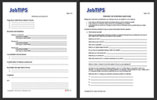
| Before you rehearse your responses to these behavioral questions, use the STAR worksheet to help you develop good responses. |
|
Behavioral interview questions are questions that ask what you would do in certain situations, or how you have handled certain situations in the past. Behavioral questions help the interviewer learn more about your personality, your communication and social skills, and your ability to cope with and solve problems. You will not be asked all of these questions, and the questions may not be exactly the same (word for word) in the real interview. It just depends on the specific employer and job.
- “Did you ever change your mind about something? What made you change your mind?”
- “Some people are not so easy to get along with. Tell me about a time where you had to work with someone in school or on the job who you did not particularly like.”
- “What is / was the hardest class for you in school? What did you do when you had a particularly hard time with it?”
- “What is the best thing for you to do when you feel like you might lose your temper?”
- “Do you enjoy working with others?”
- “What is the best part of working or playing on a team? What is the worst part?”
- “Describe a time where you helped someone. Who were they and what did you do to help them?”
- “Have you done any volunteer work with school or any other organizations? What tasks did you do in that volunteer work?”
- “What do you do when you make someone (like a friend, teacher, parent, coach) angry?”
- “Let’s say you are given a new work task or project, but you do not understand what to do. What would you do first?”
There are many more examples of standard and behavioral interview questions and answers on the internet. Type "job interview questions" into a search engine and you will likely find many examples and suggestions.
Some people choose to disclose their disability to their potential employer during the interview. Click here for more information about if, when, and how to disclose your disability.
 |
When rehearsing your responses, practice WHAT to say and HOW to say it. When practicing, role-play with a trusted friend, family member, counselor, or teacher who can give you helpful feedback.
1. Practicing WHAT to say:
The more questions you rehearse, the better. It is impossible to predict what you will be asked. However, you should at least rehearse answers to the following questions:
- "Tell me a little about yourself."
- "Tell me about your previous work experience."
- "Why are you interested in this position?"
- "Why did you leave your previous job?"
- "What are your strengths and weaknesses?"
- “Some people are not so easy to get along with. Tell me about a time where you had to work with someone in school or on the job who you did not particularly like.”
- “What is the best part of working or playing on a team? What is the worst part?”
- Remember, you are trying to get the job, so be honest and present yourself positively and favorably. You are trying to show them why they should hire you and why you would be a good employee.
Practicing HOW to say it:
- Most of your answers should be at least 5 sentences long.
- As you answer a question, practice pausing for a few seconds after a few sentences.
- Practice making occasional eye contact for at least 5 seconds.
- Practice smiling occasionally as you rehearse responses.
- Practice sitting up straight and facing the interviewer.
- Practice sitting still in your chair rather than fidgeting.
- Practice speaking with an upbeat tone of voice.

|
 |
GETTING A JOB
Interviews
Before the Interview - Research Company |
|
GETTING A JOB
Interviews
Before the Interview - Think Like the Interviewer |
 |
|
|
