 |
Keeping a Job
Coping Strategies
Strategies - Quick Strategies
 Why? Listening to music is relaxing for many people. Why? Listening to music is relaxing for many people.
How? Listen to music as a break from your work to cool down if needed. You may need to set a timer for a short amount of time when listening to music so that you get back to your work when needed. Make sure your supervisor allows you to use headphones at the workplace. |
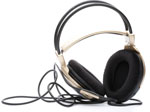 Why? Blocking out sound helps some people relax and focus on their work. Why? Blocking out sound helps some people relax and focus on their work.
How? Your headphones don’t have to be on or playing music, but just there to block out some of the noise around you. Larger head phones seem to work the best.
|
Why? Squeezing a stress ball can help you release or "vent" your stress in a healthier way. It also helps shift your focus away from what is upsetting you.
How? There are many ways to use stress balls when you feel tense. You could: 
- Hold a stress ball in each hand and squeeze 20 times.
- Hold a stress ball in your left hand, squeeze 10 times, then hold the stress ball in your right hand and squeeze 10 times.
- Set a timer for 1 minute. Squeeze the stress ball during that minute.
- Set a timer for 30 seconds. Squeeze the stress ball with your right hand. Then set the timer for 30 seconds and squeeze the stress ball with your left hand.
|
Why? Exercise can help you "burn off" some extra stress and frustration. It also helps you shift your focus away from whatever is upsetting you. And, exercise is good for your overall physical and mental health!
How? Here are some things to try:
 Walk up and down the staircase for 10 minutes. Or, walk up and down the staircase 5 times. Walk up and down the staircase for 10 minutes. Or, walk up and down the staircase 5 times. - Take a short walk around the building / work area.
- Use small hand weights (keep them in your desk drawer or work bag).
- Do jumping jacks.
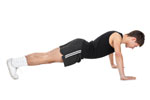
- Do push-ups.
- Do a combination of these exercises. Click here for an example of a quick exercise routine you could do at work.
|
Why? Stretching your muscles could make you feel calm and relaxed. It also lets you take a short break from whatever you are doing.
Where? Be careful not to stretch in front of customers. That would look unprofessional! You could stretch in your office space or work area, in the break room, or outside.
How? It may help to have a stretching routine to follow. |
Why? 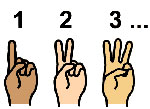 Counting can help you shift your focus away from whatever is making you upset. Counting can make you feel more calm and relaxed. Counting can help you shift your focus away from whatever is making you upset. Counting can make you feel more calm and relaxed.
How? You might count quietly, or you might count in your head. You could even write down your numbers on paper if you would prefer.
Check out this demonstration of counting exercises.  |
Why? Talking to someone can help you vent your feelings and get some of your frustration out. The person you are talking to may also suggest ways to handle the situation appropriately.
How?
- Make sure you are allowed to make brief personal calls or send personal emails from work.
- Phone calls should be no longer than 5 to 10 minutes.
- Keep a short list of the phone numbers or email addresses of people you want to contact if you are upset. That way, you can reach them easily if needed.
|
|
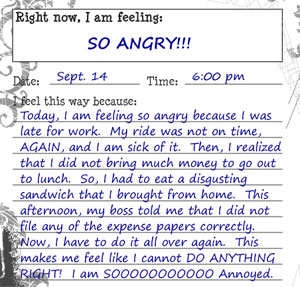
What? You can write down almost anything in this journal—it is for your eyes only (private).
Why? Your journal can be a place where you vent about what is bothering you. Some people find it helpful to write down what is bothering them. It helps them process the situation, and it calms them down.
Where? You can write in your journal in your work area, at a desk, in the break room, or outside. Keep your journal in a safe place, such as your bag, locker, or desk drawer. |
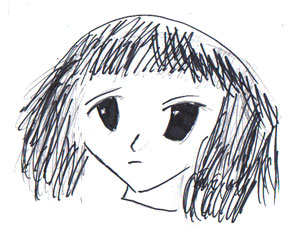 What? You do not have to be a great artist to draw. Draw whatever you want. You can scribble "angry" lines on a page, or draw a real picture. It is up to you! What? You do not have to be a great artist to draw. Draw whatever you want. You can scribble "angry" lines on a page, or draw a real picture. It is up to you!
Why? Drawing can help you "vent" or release your emotions on paper.
Where? You can draw in your work area, at a desk, in the break room, or outside. If you do not want others to see your drawings, keep them in a safe place, such as your bag, locker, or desk drawer. |
 What? Puzzles, word searches, reading, surfing the internet, or playing computer games (on a handheld device such as a PSP or phone) are some examples of hobbies. What? Puzzles, word searches, reading, surfing the internet, or playing computer games (on a handheld device such as a PSP or phone) are some examples of hobbies.
Why? Engaging in a hobby takes your mind off what is bothering you. It puts you in a better mood because you are doing something enjoyable. It also gives you a short break from work, and everybody needs to take breaks sometimes.
Where? You could do this at your desk or in your work area, in the break room, or outside. |
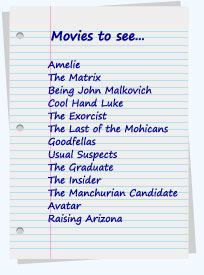 What? Some people like to make "to do" lists or grocery lists. Others might enjoy making a list of facts, numbers, names, dates, or places that are particularly interesting to them. What? Some people like to make "to do" lists or grocery lists. Others might enjoy making a list of facts, numbers, names, dates, or places that are particularly interesting to them.
Why? Some people feel a sense of calm and control when they can make lists. |
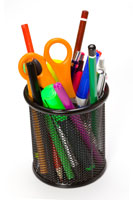 Why? Some people feel a sense of calm and control when they can take a few minutes to organize their things. Why? Some people feel a sense of calm and control when they can take a few minutes to organize their things.
How? Here are some things you might do to get organized:
- Sort tools, pens, paper clips, pencils.
- Put papers in correct binders, folders, notebooks.
- Delete old emails; put important emails in folders.
- Organize word documents and spreadsheets into folders on computer.
- Clean out wallet or purse.
- Clean out work bag.
- Delete old phone contacts.
- Fill in your calendar or planner with important dates.
|
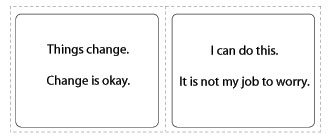
What? A self-calming statement or mantra is something you say to yourself to make yourself feel better.
Why? It is a way to soothe yourself.
How? Some ideas of self-calming statements include:
- "Everybody makes mistakes. It is OK."
- "Things change. Change is OK."
- "I can handle this."
- "Everything will be all right."
- "I can do this. It is not my job to worry."
Your statement should be individualized to you. Whatever makes YOU feel better, should be your mantra. Saying the statement over and over to yourself can make you feel better. Even better, print out your self-calming statement and carry it in your wallet or tape it to the inside of your desk drawer. Read your statement to yourself when you feel upset. You could also write your mantra on your calendar or schedule. That way you can read it frequently throughout the day. |
 |
KEEPING A JOB
Coping Strategies
Strategies - Relaxation Exercises |
|
KEEPING A JOB
Coping Strategies
Strategies - Repetitive Behaviors |
 |
|
|