Responding to Comments and Questions
It is normal for people to make comments and ask questions when they are at work. This is often part of making small talk. People who work near you (e.g., your co-workers) might make comments to you as they are working. For example, they may say something like, “It takes a long time to sort this silverware.” or “Gosh, it sure is cold out there today.” Or, they may ask questions, such as “Where is the stapler?” or “Why is it always raining these days?”
When someone speaks to you, you should respond to them. There are times when you need to respond to co-worker’s comments verbally (by saying something), and other times when you can respond nonverbally (by gesturing, nodding your head, or smiling). It can be difficult to figure out how to respond to certain comments.
Here are some guidelines for responding to comments and questions:
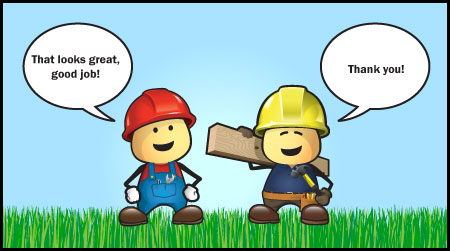
- Respond verbally to compliments or praise. When someone compliments you, it is important to respond to them by saying “Thank you.” It is usually considered rude if you don’t respond to compliments.

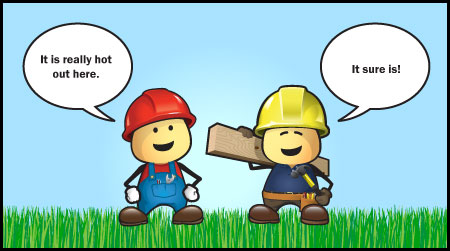
- Respond to general comments either verbally (by talking) or nonverbally (by gesturing, nodding, or smiling). General comments are things people say to make conversation or because something comes to their mind and they want to share their thought. General comments could be about the weather, the task they’re doing, a movie they saw, or a lot of other topics! You can respond to these general comments by saying something back in response, or in some cases, it might be okay to nod your head or smile (as if to say, “I agree”). Certain facial expressions and gestures can be appropriate responses to some general comments.
| Examples of general comments: |
Examples of appropriate responses: |
“I am having a bad day.” |
“I’m sorry to hear that.” |
“I am so ready for lunch, I am starving.” |
Shake head “yes” to agree. |
“This makes no sense.” |
“Let me see, I might be able to help.” |
“I am feeling stressed.” |
“I’m sorry.” |
“It’s almost the weekend!” |
Smile in response. |
“I finished the project!” |
Thumbs up. |
“There are a lot of customers here today.” |
Shake head “yes” to agree. |
|
- Always respond verbally when you are asked a direct question.
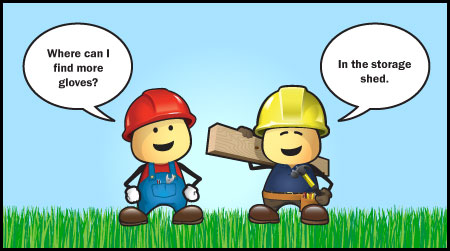
Here are some examples of direct questions:
- "Can you help me with this?"
- "Where are the extra paper towels?"
- "Do you know how to fix this printer?"
- "Where is the next meeting?"
- "What time is your shift over?"
- What if you don’t know the answer to their question?
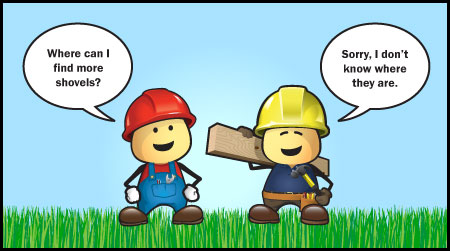
Even if you do not know the answer, you need to respond. 
What if you need more time to think about the question they have asked?
When someone asks you a more complicated question, you might need some time to process (think about) the question. In this case, it is okay to say something like, “I need a little time to think about that. Let me get back to you.”
 |
- Comments and questions are a normal part of the work environment.
- Respond to any compliments or praise by saying something like, “Thanks!”
- When someone makes a comment, you can respond verbally (by saying something) or nonverbally (by gesturing, nodding, or smiling).
- You need to respond immediately to all direct questions.
- If you do not know the answer, say something like, “I’m sorry, I don’t know.”
- If you need more time to think about a question, say something like, “I need some time to think about that.”
 |