
 |
Keeping a Job Co-Worker Interactions
|
|||||||||||
 Conversations and Small Talk - Overview
Visit the Social Skills Toolbox for more help with communication skills. |

 What you did the night before or over the weekend If you are busy at work that day Current events or newsQuestions about a hobbyTelevision shows, movies, or music Plans for an upcoming weekend or holiday
It is okay to engage in small talk with co-workers for approximately five minutes or less before working as part of the greeting process, at the end of the day, or as a brief break during the work day. You might engage in small talk for longer periods of time during a lunch break or after work.
|
|
 |
Topics of Conversation at Work |
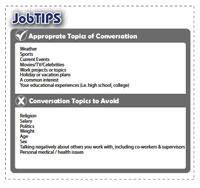
There are some conversation topics you should avoid when at work.
Conversation topics to avoid include:
 PoliticsReligionSalaryPersonal financial problemsPersonal questions about relationshipsSexPersonal health issues Negative comments about other co-workers or your supervisor
You should avoid these topics because they are either controversial topics (politics and religion) or personal topics (salary and relationships). You should steer clear from controversial topics because you could get into a disagreement about different points of view. You should also avoid personal topics because people may not feel comfortable sharing or hearing that type of information. 
|
|


