 Overview
A resume is a document that outlines your past work experience and training so that a potential employer can quickly view your skills and experiences. It is a summary or highlight of your strengths to show that you are a good candidate for the job. A resume generally contains the following components:
- Your name and contact information
- Your educational history
- Your previous work history
The following components may also be included in your resume, but they are optional depending on your background:
- Objective
- Additional Skills/ Software Knowledge/ Technical Skills
- Honors or Awards
- Volunteer work
- Associations or Clubs
- Hobbies or Interests
- References

Please pay attention to the writing of the Date when completing forms and/or writing your cover letter/ resume. Depending on the country, dates may be written in different ways, example the USA standard is MM/DD/Year – other countries might use DD/MM/Year. Another option is to spell the month (January) to clarify.
Here are a few web sites examples that can provide you with ideas on how to create your resume and cover letter:
www.resumecompanion.com
www.hloom.com
www.thebalancecareers.com
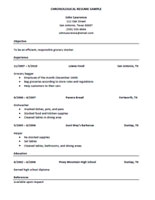
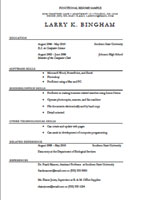
There are two main types of resumes: Chronological and Functional.
|
|
| A chronological resume lists your work experiences in order from most recent to oldest. This is the most common type of resume. |
A functional resume lists your work experiences in sections to highlight certain skills or areas of strength. A functional resume does not necessarily list your work experiences in chronological order. |
If you took time off or have been unemployed frequently, it looks less noticeable on a functional resume. Otherwise, you should use a chronological resume, as it is the easiest format to organize. Some companies may prefer or even insist on a chronological resume.
Here are two templates for you to create your own resume: